
-
Publish Your Research/Review Articles in our High Quality Journal for just USD $99*+Taxes( *T&C Apply)
Offer Ends On
Publish Your Research/Review Articles in our High Quality Journal for just USD $99*+Taxes( *T&C Apply)
Offer Ends On
Mamudu Samson Toyosi* and Darda Folorence
Corresponding Author: Mamudu Samson Toyosi, Dept of Biology Education, Federal College of Education (T) Bichi, Kano, Nigeria.
Received: April 01, 2026 ; Revised: April 25, 2026 ; Accepted: May 01, 2026 ; Available Online: May 07, 2026
Citation: Toyosi MS & Folorence D. (2026) Investigation of Processed Pauletia Monandra (Kurz) Seed-Meal on the Growth and Cost Viability of Claris Gariepinus Fingerlings (Teugels) Fed Varying Level of Inclusion in Sustainable Fish Production in Federal College of Education, Technical Bichi, Nigeria. J Agric For Meterol Stud, 4(3): 1-8.
Copyrights: ©2026 Toyosi MS & Folorence D. This is an open-access article distributed under the terms of the Creative Commons Attribution License, which permits unrestricted use, distribution, and reproduction in any medium, provided the original author and source are credited.
Views & Citations
Likes & Shares
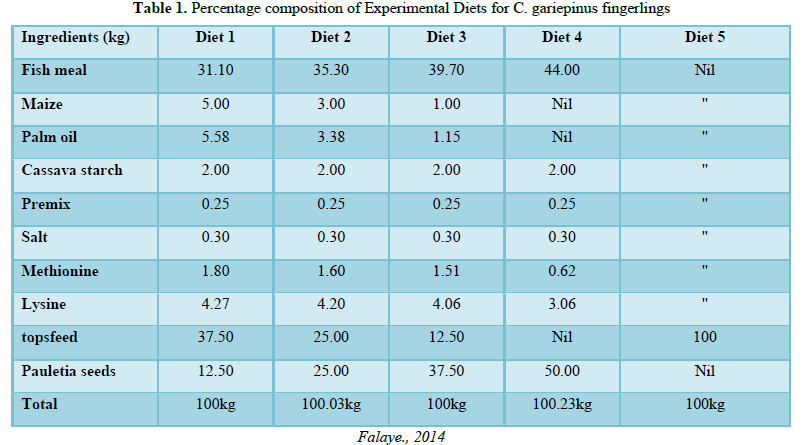
Pauletia monandra meal was experimented for its ability and inclusion to partially replace fishmeal in the diet of Claria gareipinus fingerlings under out-doors culture system. The study was conducted in biological garden, fisheries unite department of Biology Education, Federal college of Education (tech) Bichi. Kano State, Nigeria (8-9 0E and12-130N) Five Feeds were formulated to meet the crude protein value of the control diet which is top feeds at 49.19%. The diets were fed to fish at 5% body weight thrice per day (8-9 am, 1-2pm and 4-5 pm). The experiment was conducted for 54 days, measured among other parameters are feed conversion ratio (FCR), specific growth rate (SGR) stander length (S) percentage survival rate of 88% was achieved. There was no significant difference (P>0.05) in the growth parameters and the control diet in the fish samples. Although P. monandra supported the growth performance and feed utilization was favored by low inclusion. Diet l was the most economical in terms of its relative cost of feed per unit weight gain of fish with only N7.09 diet per gram of weight gain, diet 5 (top feeds) was the most expensive (NI70.00 kg).The combination of P. monadra seeds meals formed a cheaper and better balanced diet for fingerlings of C gariepinus the use of processed P. monandra seeds meals to supplement artificial feed in catfish production is cost effective and has high potential.
Keywords: Growth, Performance, Survival, Standard Length Fingerlings Concrete Pond.
INTRODUCTION
Aquaculture shares the same challenges with Agriculture in increasing food supply and this brings about competition in the use of feeds for livestock and fish farming. Shortages of major feedstuff has been on the increase in recent times in Nigeria and with the poultry and livestock industry expanding, the aquaculture industry is finding it increasingly more difficult to source for critical feed ingredients (Adewola 2008, Agbugui, Oniye and Auta, 2010, Mamudu, Aminu and Hassan,2018). For aquaculture to supply the population's growing demand for fish as food and to fill the gap in declining yield from capture fisheries, basic but critical information should be available especially regarding feed that are less competitive and of low cost value but with replaceable capacity for fish meals with the aim of making fish to attain table size at reduced culture time and minimum production cost (Umaru, Auta, Oniye and Bolorunduro , 2016, Burke, 2019).
Utilization of non-conventional protein supplements of both animal and plants origin in practical fish diets has been a focused in Nigeria in recent times. It is imperative for such practical diet to contain optimum protein, required essential amino and fatty acids (F.A.O, 2020).Recently, the analysis of nutritional value of wild plant seeds attracted attention, they have shown to contain significant amount of essential nutrients (proteins, amino acids, vitamins, minerals, oils and carbohydrates) that can be used for the formulation of animal feeds, In view of the presence of anti-nutritional factors in these seeds, they have to be processed to deactivate the protease inhibitors, or reduced to a level that can be tolerated by the fish or completely eliminated (Anhwange, Ajibola, and Oniye, 2005, Anwa, Auta, Abdullahi and Bolorunduro, 2017 and Salgueiro, 2022). P. monandra is typically a savannah tree found in Nigeria. Its seeds have been subjected to a variety of uses. For example, Teixeira, Farias, Sousa and Vasconcelos, (2013) reported that diets made from P. monandra seeds were used to feed Japanese quails and the diet enhanced growth and the onset of early egg lying. The seeds have a high protein content which is found to be 33% (Ferouz, Kurt and Kasiuviswanathan, 2012).
Various qualities such as availability (during the dry season), ease of propagation and simple processing techniques make P. monandra a choice for research into its suitability for compounding fish feed formulation for C. gariepinus.The African cat fish has been chosen for this study because of its importance in aquaculture. C. gariepinus is one of the culture able fish species because it is hardy, can withstand stress, its rapid growth rate, acceptability of variety of food items and its ability to respond to induced breeding, Omosowone and Ogunrinde, (2018). The fish is highly priced with high economic returns as fresh or smoked or dried fish with high demand (Abduilah, et al 2009, Tunde, Babatunde and Oluseyi 2018).
Objectives; to investigate the possibility of inclusion of processed P. monandra seed meal in diet of C. gariepinus
Hypotheses
MATERIALS AND METHODS
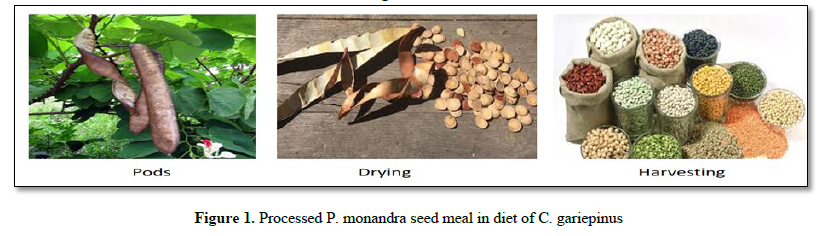
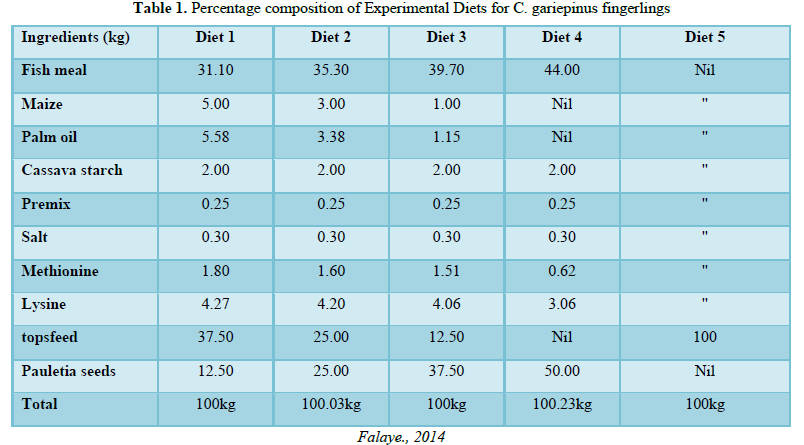
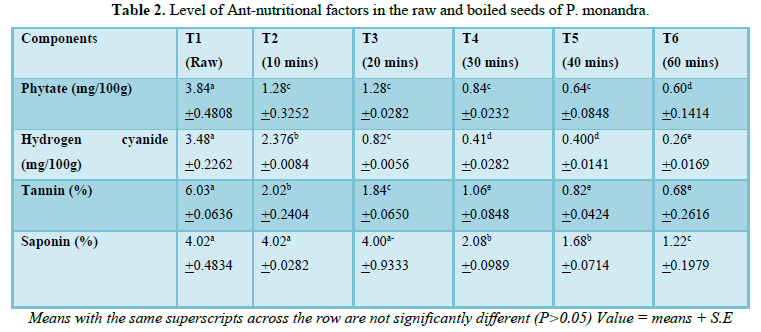
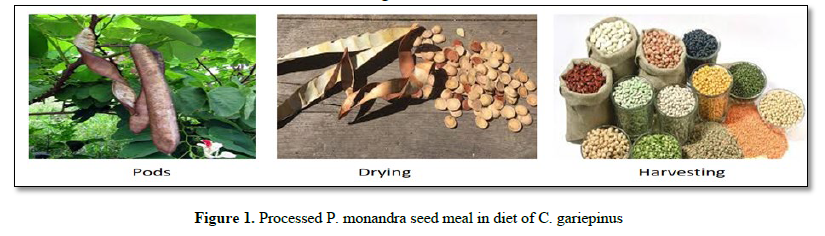
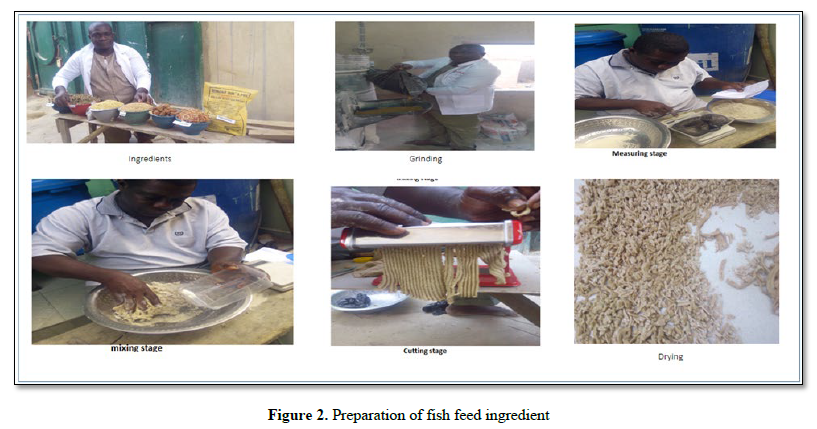
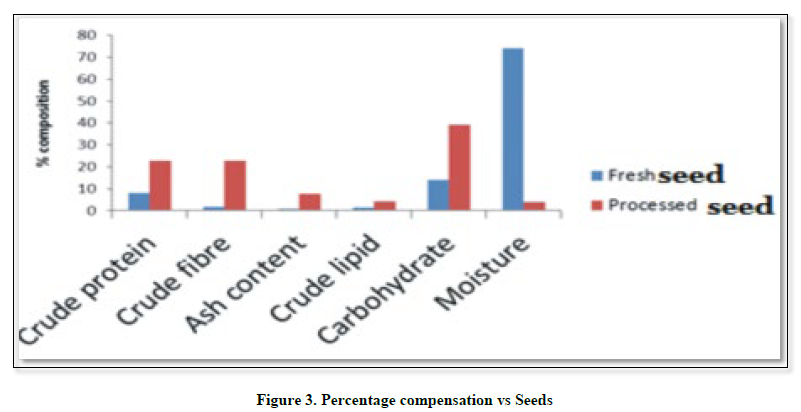
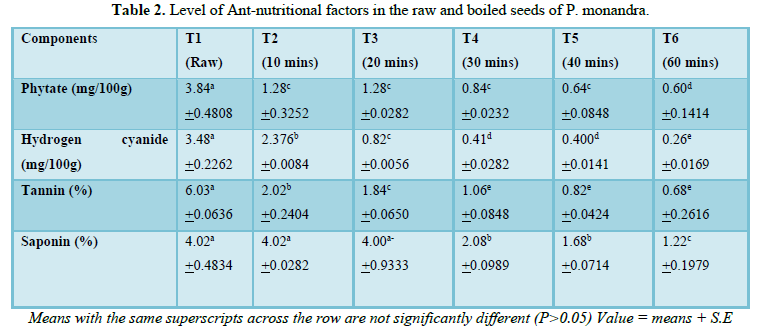
Diet formation and preparation. Freshly harvested dry pod of P. monandra from Biological garden of the Department of Biological Sciences Ahmadu Bello University, Zaria, Nigeria was collected, drying and package. Other feeds ingredients such as yellow maze, fish meal, cassava starch, vitamin premix and salt, were purchased locally from market from Badume markets and commercial feed stores in Bichi. Kano. Five portions of P. monandra seeds (100g each) were boiled at different time intervals of 10, 20, 30, 40 and 60 minutes corresponding to T2, T3, T4, T5 and T6 respectively, the six portion T1 was raw and not boiled the boiling process was carried out using a pressure pot with about 3L of water on gas burner. The boiled seeds were then air dried for one week in the laboratory and grounded into fine powder and label and packaged in labeled polythene bags. Proximate analysis and the level of their ant- nutritional content were also determined. All dietary ingredients were milled using locally fabricated hammer mill and sieved through a 595um sieve to remove stones and dirt as well as ensure homogeneous size profile before being analyzed for proximate composition including mineral premix/ vitamin supplement and table salt were added and mixed during grinding to ensure homogeneousness. The binder was made by first making a 3g cassava paste and then adding about 2 liters of hot water to the paste while constantly stirring the past. The powered diets prepared were mixed with cassava paste to make dough and then made into pellet (2millimeters) from using a modified small size hammer mill pelletizing machine. The pellet was air dried for one week and bagged. The proximate analyses of the diets were determined by the method described by AOAC (2020).
Experimental System and Feeding Trial
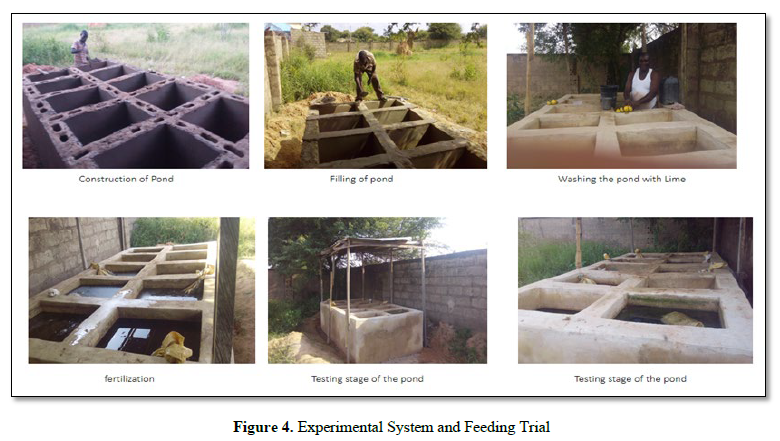
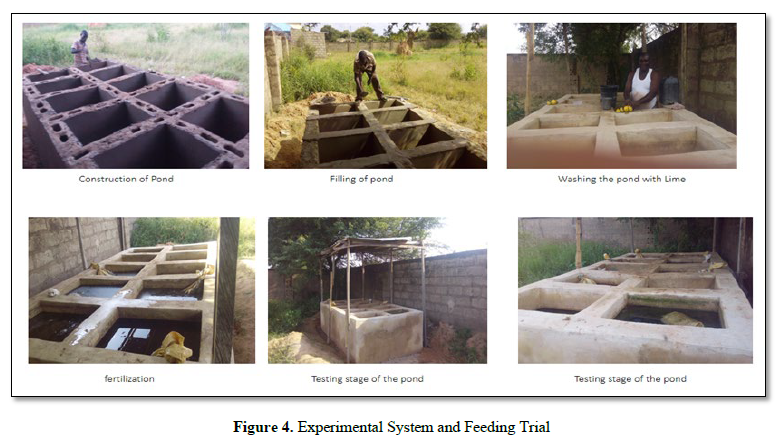
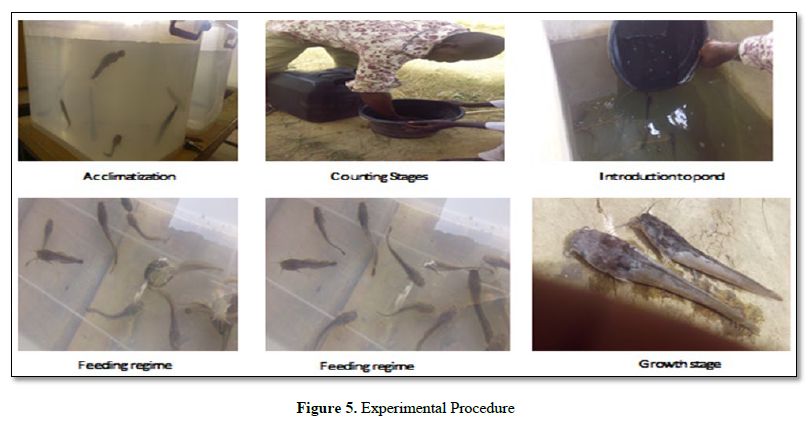
The concrete out door pond of (1.3x0.9x1m), were thoroughly washed and scrubbed with agricultural lime (CaCo3) which served as disinfectant. The ponds were then rinsed and drained after 24 hours to clear the ponds of the lime. Thereafter each Pond was filled with 150litres of water from reserved tank in the garden, with sources from Baguwie reservoir water. With a labeled on each feed assigned to experimental diet. The fifteen ponds were each stock with twenty fingerlings of C. gariepinus selected randomly. The water in each pond was changed fortnightly to remove the faeces and left over food. The experimental fish C. gariepinus fingerlings were collected from the Genetic Improvement Laboratory, Funtua hactary units Nigeria. They were acclimatized for six days before the takeoff of the experiment; this was necessary to enable the fingerlings empty their stomach content and to force them to adjust to the new diet.
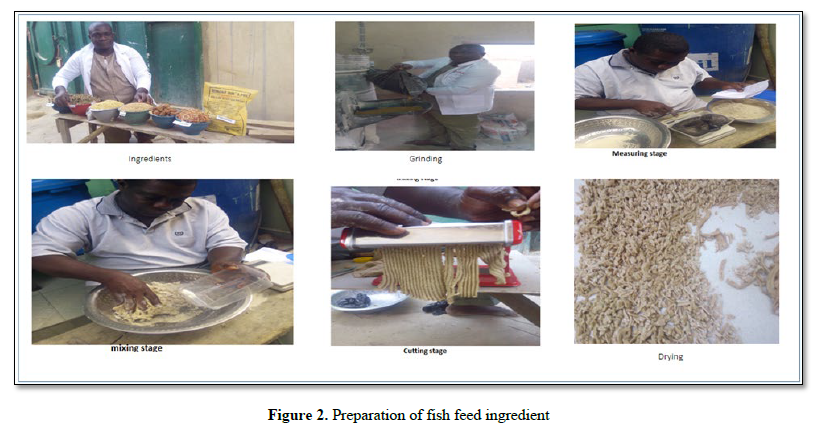
Preparation of fish feed ingredient
 Experimental System and Feeding Trial
The concrete out door pond of (1.3x0.9x1m), were thoroughly washed and scrubbed with agricultural lime (CaCo3) which served as disinfectant. The ponds were then rinsed and drained after 24 hours to clear the ponds of the lime. Thereafter each Pond was filled with 150litres of water from reserved tank in the garden, with sources from Baguwie reservoir water. With a labeled on each feed assigned to experimental diet. The fifteen ponds were each stock with twenty fingerlings of C. gariepinus selected randomly. The water in each pond was changed fortnightly to remove the faeces and left over food. The experimental fish C. gariepinus fingerlings were collected from the Genetic Improvement Laboratory, Funtua hactary units Nigeria. They were acclimatized for six days before the takeoff of the experiment; this was necessary to enable the fingerlings empty their stomach content and to force them to adjust to the new diet.
Experimental Procedure
The experimental fish were randomly distributed at a stocking density of 20 fingerlings per tanks in triplicates. They were fed at 5% body weight twice daily morning and evening at equal ration. Sampling was done weekly using a sensitive electronic balance (Soehnle - 2000g Model) to determine the average weight of the fish and adjust the feed accordingly.
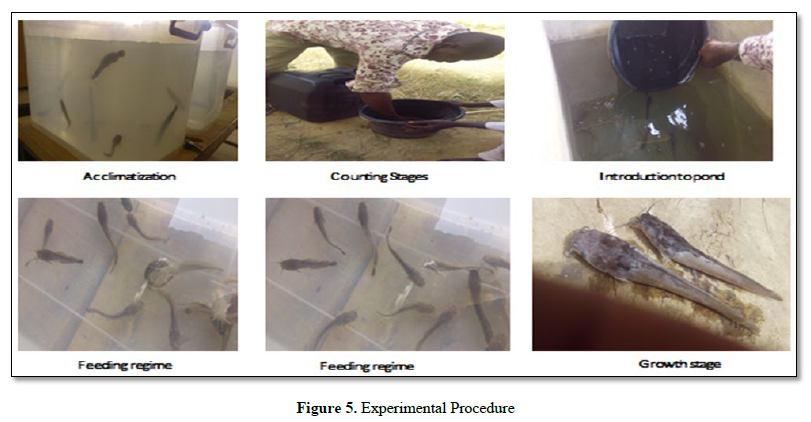
The study was conducted for 54 days. All analyses for proximate composition including the carcass composition before and after the experiment were determined according to the methods of (Association for Official Analytical Chemist) AOAC (2020). Water temperature was monitored daily with a standardized mercury thermometer while dissolved oxygen and PH were determined using Digital DO meter and Jenway Automatic PH meter (Hannan HI98129) respectively.
Measurement of growth parameters.
Food conversion ratio (FCR), Specific growth rate (SGR) and Percentage survival rate were Determined as follows (After Fagbenro et al., 1991).
FCR = Dry Weight Feed Supplied
Total Weight gain by fish (g)
SGR (%) - 100 (Log6 Wt-Log" WO
T (days)
Average Daily Wt gain - Wt – Wo
T (days)
S (%) = Nt x l00
No
were
Wt = Final body weight of fish in grams at the end of the experiment,
WO = Initial body weight of fish in grams at the beginning of experiments.
Log6 = Natural Logarithm of bom final and initial body weight of fish in grams.
T = Duration (time) of the feeding trial in days.
No = Number of fingerlings alive at the end of experiment
S = % survival
Gross Protein Value (GPV): This is commonly used biological method for evaluating proteins. This was determined using Devendra (1988) method as.
GPV = A/AO where
A = g increase in weight gain
g test protein
AO = g increase, in weight gain
g test protein
Protein Intake (PI)
This was determined following Sveier et al., (2000) method using the formula: PI = Total feed intake x % crude protein in the diet.
Protein efficiency ratio (PER)
This index use growth as a measure of nutritive value of dietary protein. At was determined using Wilson (1989) as
PER = Mean weight gain (g)
Mean protein intake (mg)
Productive protein value (PPV)
This expresses the percentage of ingested protein that is retained by disposition in the carcass. It is usually calculated by the carcass analyses method of miller and Bender (1955). When no correction for endogenous nitrogen losses is made the results are expressed as apparent net protein utilization (ANPU)
PPV (%) = (P2-PI) X 100
Total protein consumed.
Where PI is the protein in fish carcass (g) at the beginning of the experimental and P2 is the protein in fish carcass (g) at the end of the experiment.
Sampling Monitoring during the Experimental Fish; The length and weight of each fingerling in each tank was measured at the commencement of the experiment. Subsequently, ten fingerlings were taken randomly from each tank once two week and weighed the growth rate. The sampling exercises were carried out in the morning before feeding the fish. Any dead fish is quickly removed and recorded to survival rate.
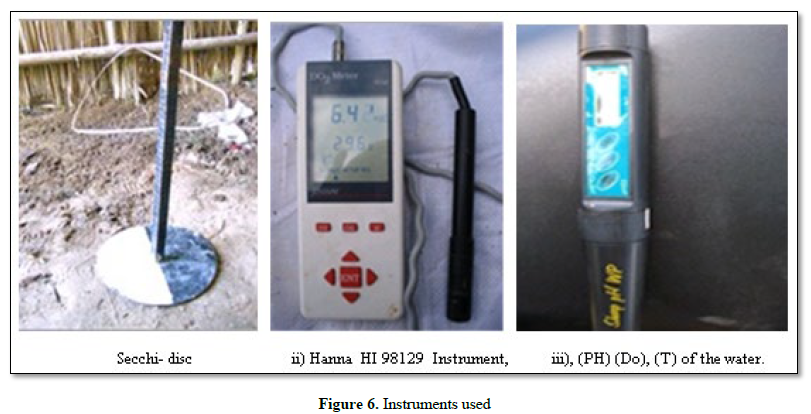
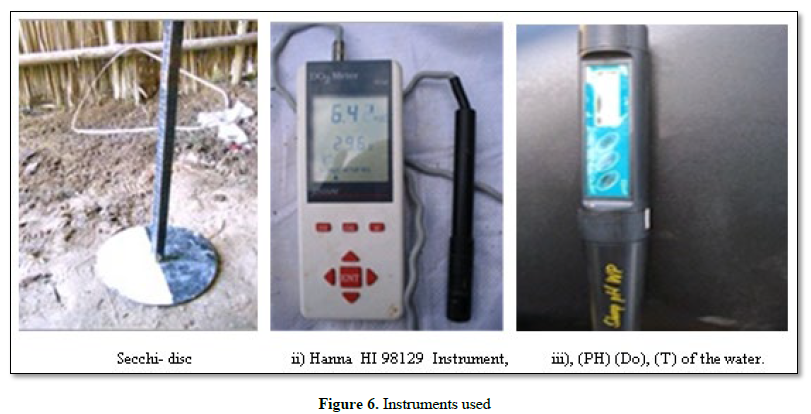
Monitoring of Water Quality: Water temperature record was taken daily before feeding (7.00-8,00) with Hanna instrument and water transparency secchi-disc thermometer. Dissolved oxygen and pH were determined using the methods described by Auta (1993)
Temperature; Temperatures readings were taken with HANNA Instrument HI 98129 dipping the mercury bulk in water for two minutes and then the value was recorded and reading on the calibrated glass stem, this was carried out weekly.
PH Hydrogen Ion Concentration; pH determination was done by using HANNA Probe Meter Instrument HI -98129 by lowering the mercury bulk in water for two minutes and the value was recorded and reading on the calibrated glass stem, this was carried out bi-weekly.
Dissolved Oxygen (DO); This was determined be-weekly by using “Winkler” test-kit (Aqua Merck) instrument were used to determine the (DO) by lowering the top into the body of water and the reading were taken and Secchi disc were used for measure transparence of water before change it, show in the figure below.
The following instruments were used during the experimental period for measuring; water dissolved oxygen, temperature, hydrogen ion consecration, water transparency and water acidity and alkalinity.
Economic Analysis of Experimental Feeds
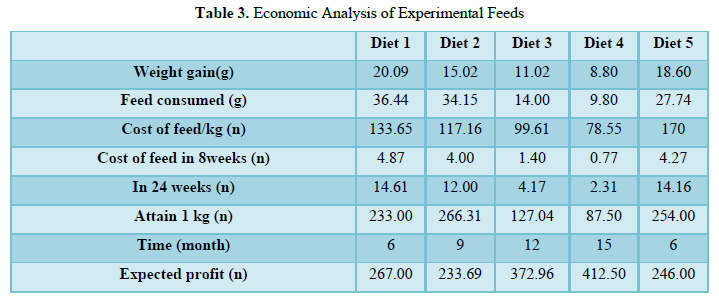
Weight gained in eight weeks of the experimental fish (C.gariepinus fingerlings) revealed that diet 1 (20.09g) was higher than all other diets, with diet 5 gaining an average weight of (18.60g) The least weight gained was observed in diet 4 (8. 80g). Fish fed diets 2 and 3 gained average weights of (15.02g) and (11.02g) respectively. Fish fed diet I consumed the fed (36.44g), while those in diet 4 consumed the least (9.80g). The cost of diet 1 per kilograms was (NI33.65), diet 2 (NI17.16/kg), diet 3 (N99.61/kg), diet 4 (N87.55/kg) and diet 5 (N170.00/kg), and during the eight weeks period, the cost of feed consumed was N4.87 for diet 1, N4.00 for diet 2, N1.40 for diet 3, N 0.77 for diet 4 and N4.27 for diet 5. If 24 weeks/6 months feeding period is considered, it will take about (N14.61) to feed and produce one fish with diet 1, (N12.00) for diet 2, (N4.17) for diet 3, (N2.13) for diet 4 and (N14.16) for diet 5. If one kilogram of fish is desired, it will cost about (N233.00) for diet 1 in 6 months, (N266.31) for diet 2 in 9 months, (N127.04) for diet 3 in 12 months, (N87.50) for diet 4 in 15 months and (N254.00) for diet 5 in 6 months. The projected profit expected at harvest time was N267.00 for diet 1, N233.69 for diet 2, NS12,96 for diet 3, N412.50 for diet 4 and N246.00 for diet.
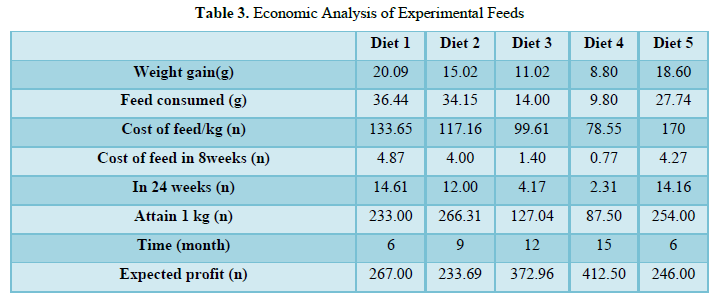
Linear Programing Showing Least Cost Formulation for Experimental Diets
Showed the possible combination of all the various amounts of each ingredient (g) and cost (N) needed in each diet at varying proportions in order to achieve 49% crude protein value of the feed at the most economical cost, gave the impetus for the calculated analysis of the experimental diets its indicates the amount of energy, crude protein, crude fibre, ether extract, potassium, magnesium, cysteine, lysine that was expected to be derived from each formulated diet after utilization by the fish. The calculated analysis also shows the cost of each diet per kilogram, with top fed as the most expensive (N170/kg) and the least D4 (N78.55). Diets 1, 2, 3 had cost values of NI33.65, NI17.16, and N99.61 respectively. The economy of weight gain showed that diet 1 was the most economical (N7.09/g) while diet 4, (NI1.72/g) was the least economically.
Statistical Analysis
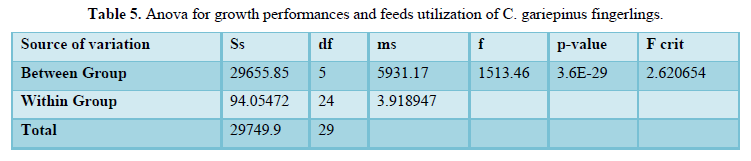
Data collected was subjected to analysis of variance (ANOVA) and the means from the various treatments were compared for significant differences (p<0.05) using Duncan Multiple Range Test (DMRT) to rank the means, System Analytical Statistical (SAS) computer package version nine (9) was used for the analysis.

Discussion
In the present investigation, all the experimental diets were accepted by C. gariepinus fingerlings, indicating that the levels of incorporation of P.monandra meals did not affect the palatability of the diets. This portrays higher acceptability and utilization of the diets with additional advantage of being cheaper sources. This observation was supported by the work of Fagbenro, (2021) and Sotolu and Faturoti, (2017). These workers reported that reduction in anti-nutritional by different processing techniques resulted in better palatability and acceptability feed.
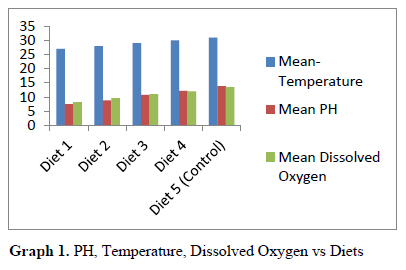
It was observed in this study that as temperature increased, pH increased and the DO value decreased. These parameters are within the range of culturing C. gareipinus fingerlings. Auta (1993) reported Temperature range of 25-30°C, Dissolved oxygen of 5mg/l and a pH range of 6.7-9.0 in a similar experiment. It is also important to note that the period of higher growth, both in weight and length, in this study, coincided with the period of higher temperature. (September to October, 2025) coincided with the warm /hot season in Kano. One of the factors affecting metabolic rate of fish is temperature. This parameter directly affects the rate of metabolic activity of fish (Fakunle et al., 2013).
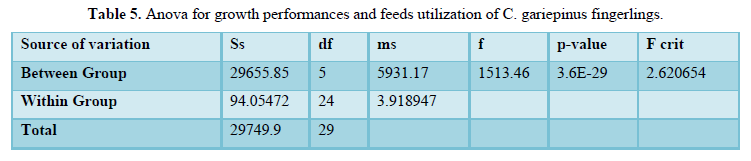
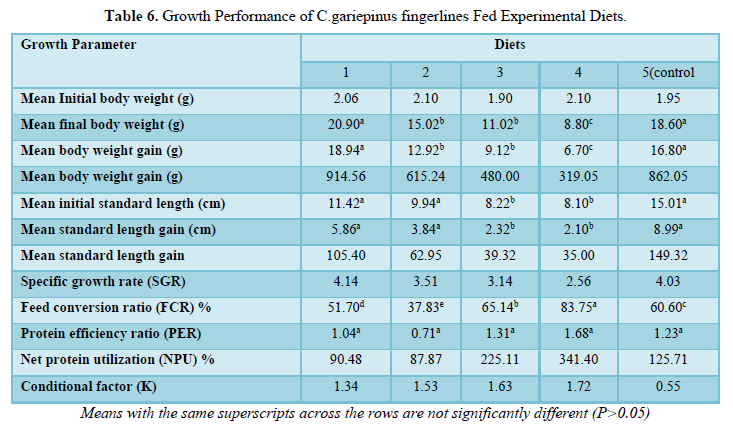
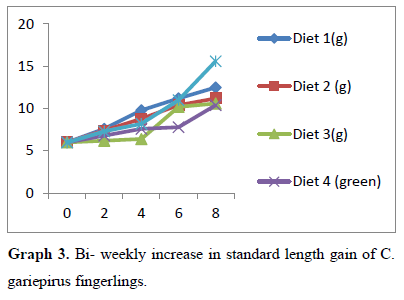
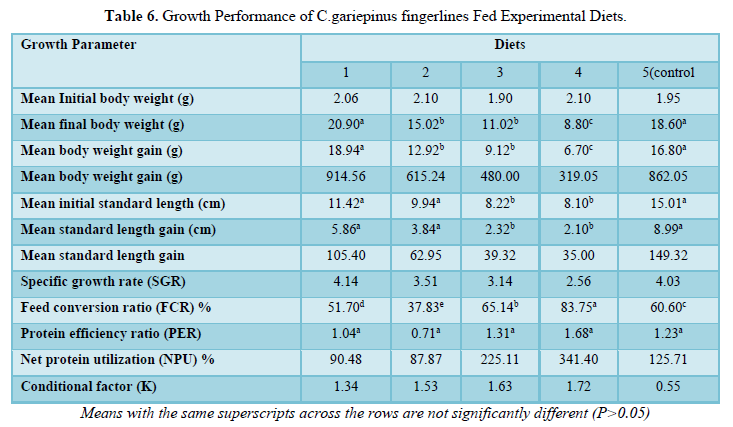
Weight gain and standard-length increases are known to be the most important indices for measuring fish responses to experimental diets and very liable indicators of growth (Balogun et al., 2008, Tunde, et al, (2018).. The study reveals that the specific growth rate per day of the fish was higher at diet 1. This might be an indication that the nutrients were best converted to flesh by the fish fed, at diet 4 level reduced the growth rate and feed utilization, which might be due to high fiber content in the diets. Contrary to observation made by Fafioye et al, 2015). Balogun et al., (2008), in other experimental diets containing processed Delonix regia seeds meal affected the growth Oreochromis nitoticus at 12.5% inclusion did not affect growth. However, at high levels of inclusion, 25% or more, the growth of O. niloticus was high growth obtained Abegunde, and Odedire, 2015). The high values of performance indices (SGR and FCR) particularly in diet 1, 2, and 5 may be attributed to the high protein content of the diets (approximately 47% and above) which is within the recommended range of dietary requirements for proper growth of C. gariepinus.
The general robustness of the fish fed P.monandra meals at different level as expressed by the condition factor (K) shows that all fish were in better condition at the end of the experiment than at then gaining revealing that accumulation of real body weight and not fat is as a result of good protein utilization the outcome was in line with Oladapo et al, (2018), reporting on practical manual of C gariepinus culture fish in Netherlands at different raged of temperature a bit higher than a set temperature at end of the experiment, but contrary to observation made by Olasunkami, (2013) on growth performance and feed utilization of Oreochromis niloticus and C. gariepinus fingerlings fed on treated levels of Delonix regia seed meal that condition was no favors at the end of the experiment. The fish carcass composition shows that the crude protein content in all fish fed the experimental diets was higher than in fish before the experiment. This position is an indication that protein synthesis was achieved. Weight gain has been attributed to a clear indication of protein synthesis, increased tissue production and real growth which is in line with the reports of Olasunkanmi et al, (2013).
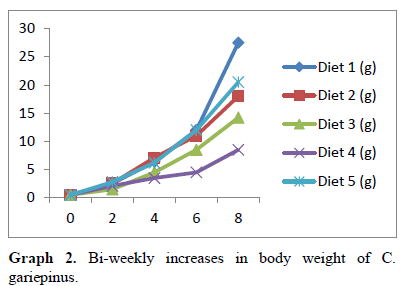
The combination diet, Diet 1 (topfeeds + P. monandra seeds) gave higher growth values over topfeeds alone and P. monandra diet alone, this portrays higher acceptability and utilization of the combination diet. An additional advantage of this combined diet is that it was also cheaper than the control diet (topfeeds alone). Similar cheaper combinations were reported by Hassan, Modu and Mohammed, (2017). It is also important to note that the period of higher growth, both in weight and length, in this study, coincided with the period of higher temperature. The period of the year when this experiment was conducted (November to December 2008) coincided with the cold harmattan season in Kano state, Nigeria. Coincidently, there was increase in temperature from 23.10-24.20C at the last two weeks of the research (6"-8" week). This may have contributed to the high growth (length and weight) during the aforementioned period. One of the important factors affecting metabolic rate of fish is temperature. This parameter is closely linked and directly affects the rate of metabolic activity of fish (Olasunkanmi, 2012).
The relative cost of feed per unit weight gain or the economy of weight gain by the fish has proven that using top feed or P. monandra seed meal alone to supplement compounded diets would not be economical to fish growth. However, the combination of both (top feeds + P. monandra seed meal) would be more economical for weight gain and growth of fish. Therefore, investment in low cost of feeding that translates to better growth rate and improved profit is advocated at this stage of global economic meltdown and high rate of exchange of the Nigerian Naira to Dollar. This study showed that P. maonandra meal, which is almost costless, could be used to partially replace the very expensive fishmeal in the diet of C. gareipinus fingerlings at regulated inclusion levels. This will no doubt reduce cost of production and thereby further boost aquaculture development in Nigeria.



Internationally Accepted

Share Your Publication :