
-
Publish Your Research/Review Articles in our High Quality Journal for just USD $99*+Taxes( *T&C Apply)
Offer Ends On
Publish Your Research/Review Articles in our High Quality Journal for just USD $99*+Taxes( *T&C Apply)
Offer Ends On
Manjusha Senapati* and Shubham Agnihotri
Corresponding Author: Manjusha Senapati, Department of Statistics and Information Management, Reserve Bank of India, India.
Received: July 18, 2026 ; Revised: July 25, 2026 ; Accepted: July 27, 2026 ; Available Online: July 29, 2026
Citation:
Copyrights:
Views & Citations
Likes & Shares
Using quarterly data from 2014 to 2025, we examine heterogeneity in India’s industrial credit landscape. The paper considers persistence in credit growth, the effect of lending rate shocks on loan maturity, and convergence across industries, organizations, loan sizes, and regions. The findings indicate that credit growth is mean-reverting, lending rates are sticky, and WALR shocks have different effects on sectors. Credit to construction and electricity shows some fluctuation, while mining is especially volatile. Manufacturing credit, by contrast, appears relatively stable. Signs of convergence are visible in working capital credit and among smaller organizations, but manufacturing and large-ticket loans continue to diverge. These patterns suggest that structural differences in credit markets shape how monetary policy is transmitted.
INTRODUCTION
The lending behavior of the economy plays a crucial role in determining how monetary policy influences real activity. It carries both financial stability and financial inclusion connotations. Industries differ in their financing needs; some rely heavily on short-term working capital, while others depend on long-term investment loans. Credit absorption also varies across public sector undertakings, private enterprises, cooperatives, and households. Loan sizes span a broad spectrum, from microcredit to exposures exceeding ₹100 core. Regional disparities persist, as rural and semi-urban areas continue to lag urban and metropolitan centers in access to formal finance. On the cost side, lending rates have moderated over the past decade, but they adjust only gradually in response to changes in banks’ funding costs. These underlying features determine how effectively monetary policy signals are transmitted. It also impacts who benefits from access to institutional credit. Existing studies on India have focused on aggregate pass-through mechanisms or bank level lending behavior. Detailed insights into the fundamental properties of credit allocation remain lacking. Answers to the fundamental questions on - Do surges in credit growth continue across various borrower groups, or do they quickly dissipate? How does volatility affect the balance between short-term and long-term lending? Over time, can underserved segments catch up with better-served ones, a process known as β convergence? Exploring these questions is important for two reasons: it helps assess the effectiveness of monetary policy and sheds light on whether the distribution of credit within the economy is becoming more inclusive. This paper addresses the gaps using disaggregated quarterly data from the Reserve Bank of India’s Basic Statistical Returns (2014–2025). We examine how credit allocation differs across industries, organizational forms, loan-size groups, and geographic segments. Three interrelated issues are examined: (i) the persistence and mean reversion of credit growth across borrower categories, (ii) the response of maturity mix (working capital versus term loans) to volatility in credit growth and lending rates, and (iii) convergence patterns across industries, organizations, loan-size groups, and population segments. The results point to several stylized facts. Credit growth tends to be mean-reverting, while lending rates are far stickier, revealing an asymmetry between the quantity and price channels. The maturity mix also shifts with volatility: short-term working capital loans act as buffers, while long-term loans provide structural stability.” Inequality in credit access persists due to the prevalence of large-ticket loans. Yet, rural and semi-urban regions have begun to close the gap with urban centers. Signs of convergence are also visible in working capital credit to construction, electricity, and mining, as well as among smaller organizations, such as co-operatives and MFIs. By contrast, manufacturing and long-term loans continue to diverge. Taken together, these results suggest that monetary policy in India is mediated as much by structural heterogeneity as by the policy stance itself. Credit markets are gradually widening, but incomplete convergence among rural areas and small borrowers still constrains inclusive transmission. Policymakers must therefore account for both persistence and structural heterogeneity in credit allocation when designing interventions. The rest of the paper is organized as follows. Section 2 reviews the related literature. Section 3 presents descriptive statistics. Section 4 examines the persistence of credit growth and lending rate dynamics across industries, loan sizes, organizations, and population groups. Section 5 analyses the impact of WALR shocks on credit using a dynamic panel framework. Section 6 explores convergence patterns across industries, organizational types, loan size categories, and regions. Section 7 discusses stylized facts on credit inequality, and Section 8 concludes with policy implications.
LITERATURE REVIEW
Research on monetary transmission emphasizes that credit frictions amplify policy shocks beyond the standard interest-rate (IS) channel. Foundational work on the bank-lending channel suggests that tighter policy reduces banks’ ability to extend credit (Bernanke & Blinder, 1988), while complementary work on the balance-sheet/financial-accelerator mechanism explains how policy-induced changes in borrower net worth alter external finance premia and real activity (Bernanke & Gertler, 1995; Bernanke, Gertler, & Gilchrist, 1999). A robust empirical regularity is that constrained borrowers respond more to monetary shocks than large incumbents; classic evidence documents stronger contractions for small firms following tightening episodes (Gertler & Gilchrist, 1994). Another strand of research highlights cross-sectoral and regional heterogeneity. Rajan and Zingales (1998) demonstrate that industries heavily reliant on external finance tend to slow down more in countries with underdeveloped financial systems. Evidence from banking studies further suggests that pass-through from policy to retail rates is often incomplete, asymmetric, and state-dependent, adjusting more rapidly in easing cycles and for new loans than in tightening phases or for legacy contracts (Cottarelli & Kourelis, 1994; Mojon, 2000). These frictions open a gap between the price and quantity channels, so credit volumes may adjust even when average lending rates change little. Related work links portfolio concentration and inequality to systemic and distributional risks. High concentration in large-ticket lending can raise correlated default risk and blunt the diffusion of stimulus, whereas deeper financial development is associated with pro poor growth and declining inequality (Beck, Demirgüç-Kunt, & Levine, 2007). In macro development, the β-convergence framework from growth economics provides a natural lens to assess whether underserved segments catch up to better-served ones (Barro & Sala-i-Martin, 1992). Applying this logic to credit markets enables one to test whether initially low-credit groups subsequently grow at a faster rate. For India, the evidence suggests incomplete and lagged pass-through, as well as pronounced borrower-segment heterogeneity. Reviews and applied studies document slower and asymmetric transmission to bank deposit and lending rates, with institutional features (pricing regimes, competition, and funding mix) shaping outcomes (Mohanty, 2012; broader syntheses in Das, 2020; and ECB/IMF surveys). These findings are consistent with international evidence that WALR-type averages adjust sluggishly relative to policy benchmarks, making reallocation of quantities central to observed transmission. Positioning. Building on these literatures, our study contributes at the borrower-segment level for India by: (i) quantifying persistence vs. mean reversion in industrial credit growth alongside the greater stickiness of lending rates; (ii) showing how volatility (in credit and rates) reallocates maturity mix between working capital and term loans; and (iii) testing β-convergence across industries, organizations, loan-size classes, and geographies to locate where inclusion is advancing and where divergence persists. This integrated view complements bank-level and aggregate pass-through studies by placing credit allocation heterogeneity at the centre of transmission.
DATA AND DESCRIPTIVE STATISTICS
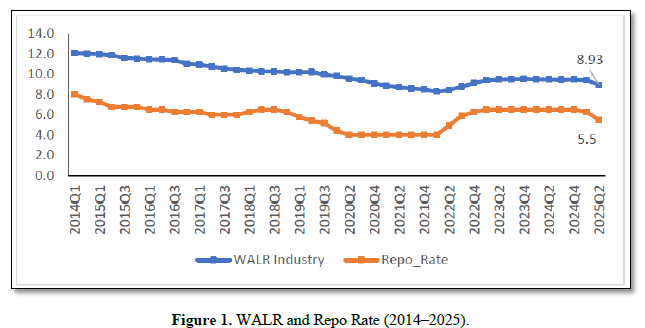
The empirical analysis conducted in this section draws on disaggregated quarterly credit datasets compiled from the Reserve Bank of India’s Basic Statistical Returns (BSR). These datasets span the period from 2014 Q4 to 2025 Q2, although coverage varies across different dimensions. Industrial credit data are reported separately by loan type, organizational category, loan-size class, and population group (rural, urban, metropolitan, and semi-urban). Complementing these, we use interest-rate information from the weighted average lending rate (WALR). Figure 1 shows the weighted average lending rate (WALR) for the industry compared to the policy repo rate. The chart highlights two key patterns: first, industrial lending rates have declined in tandem with the easing cycle, and second, industrial WALR remains relatively stable compared to changes in the repo rate. This incomplete pass-through reveals a structural asymmetry between policy signals and lending rates, raising questions about the extent to which price channels influence credit allocation in India.
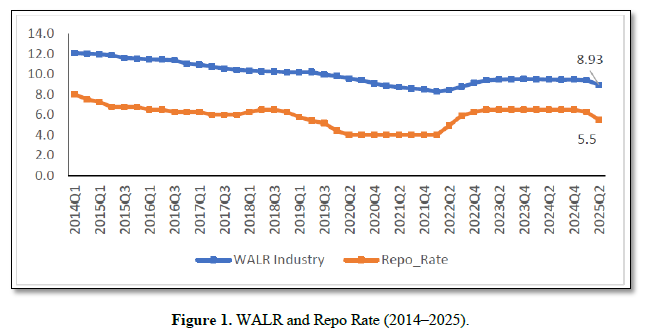
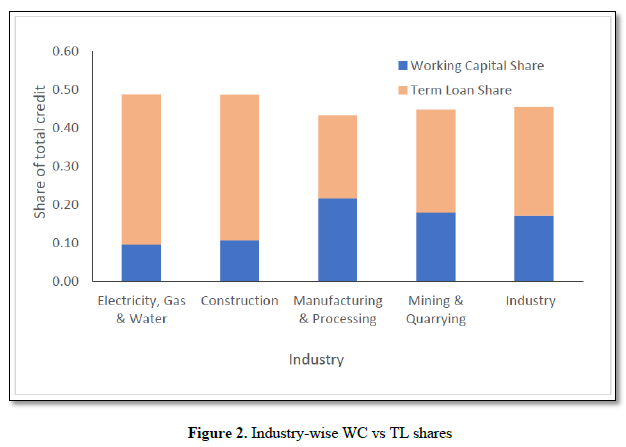
Figure 2 presents the decomposition of industry credit into working capital (WC) and term loans (TL). The data reveal firm heterogeneity: construction and electricity firms remain heavily dependent on short-term working capital financing, while long-term loans structurally anchor manufacturing.
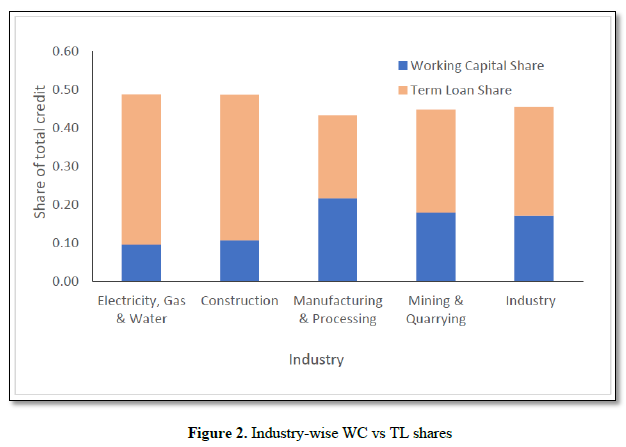
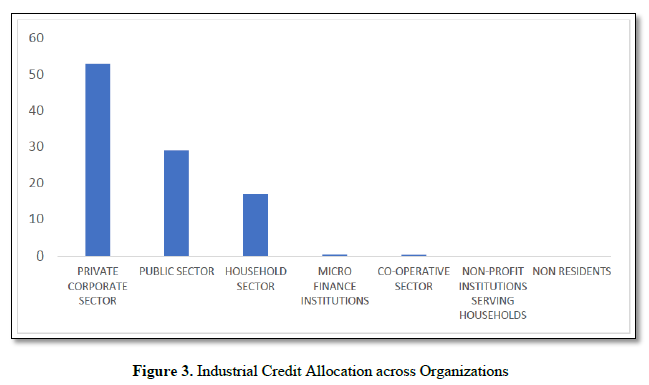
Figure 3 illustrates credit allocation across organizational categories -public sector undertakings, private corporate, cooperatives, households, microfinance institutions, and others. Public and private corporate dominate the aggregate portfolio, while co-operatives and MFIs account for a small share.
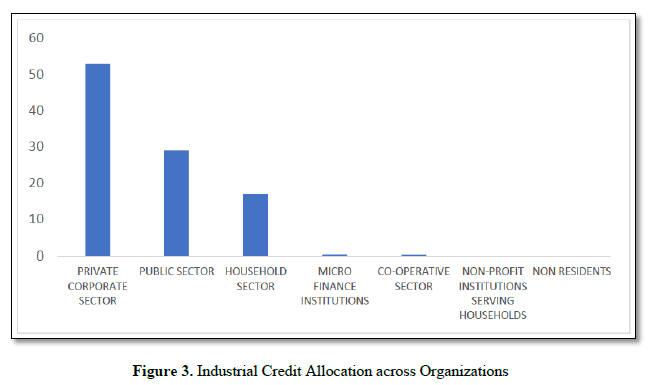
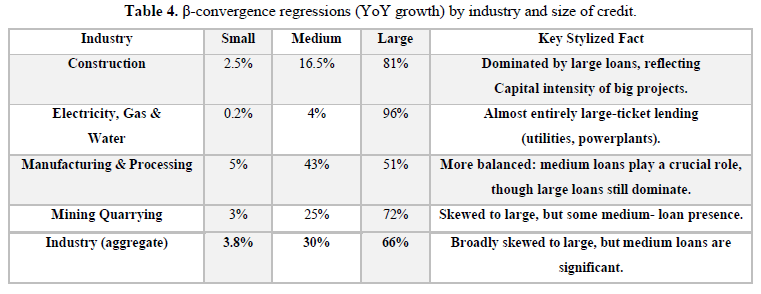
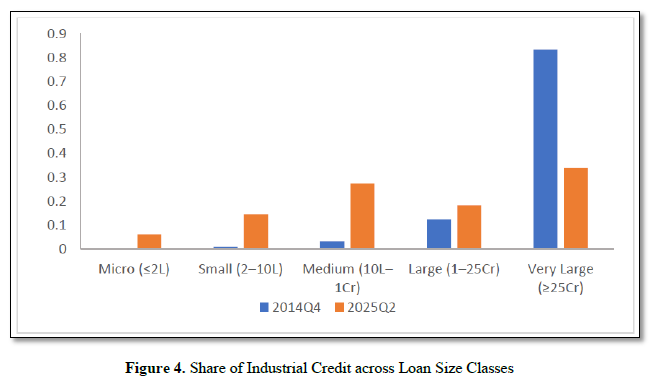
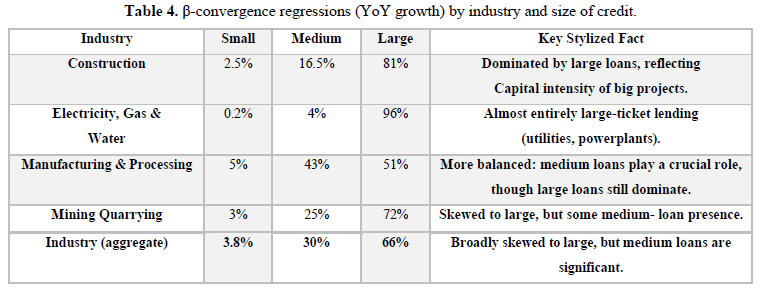
Figure 4 plots the share of industrial credit by loan-size class. The distribution is heavily skewed toward large-ticket exposures; with loans above ₹25 crore consistently accounting for over two-thirds of outstanding credit. Although small and medium-sized loans show incremental gains over the sample, the dominance of large exposures raises systemic risk concerns.
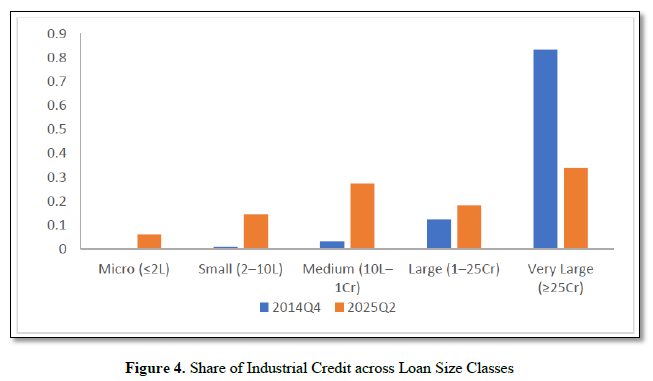
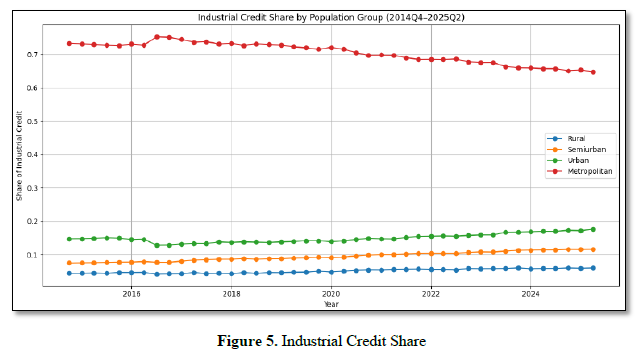
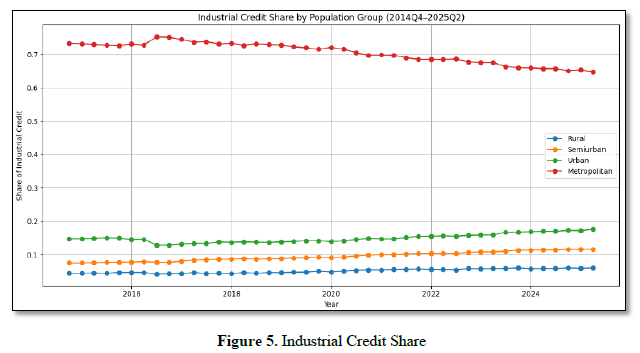
Figure 5 traces the evolution of industrial credit shares across population groups. Metropolitan areas retain the largest share, while rural regions remain underrepresented. Figure 5: Rural vs. Metro share over time.
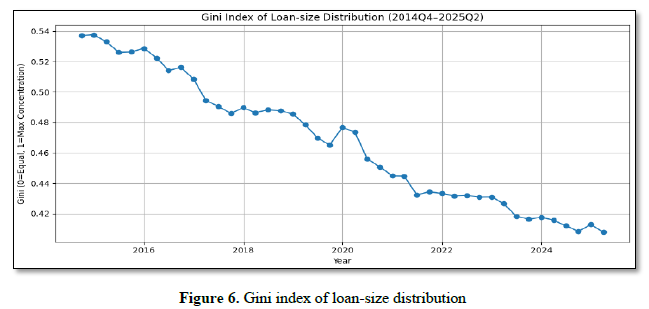
The Gini index of loan-size distribution steadily declines from about 0.54 in 2014Q4 to 0.41 in 2025Q2, indicating a gradual decrease in the concentration of industrial credit among large-ticket loans. Although industrial credit allocation remains unequal, the downward trend suggests that medium- and small-sized exposures have gained some share over time, reflecting incremental progress in financial inclusion. The trend highlights a slow but persistent broadening of access beyond large corporate.
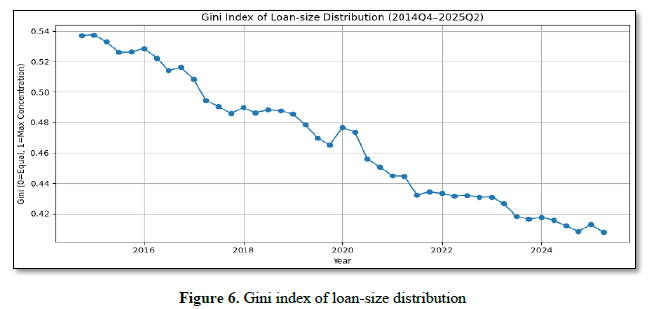
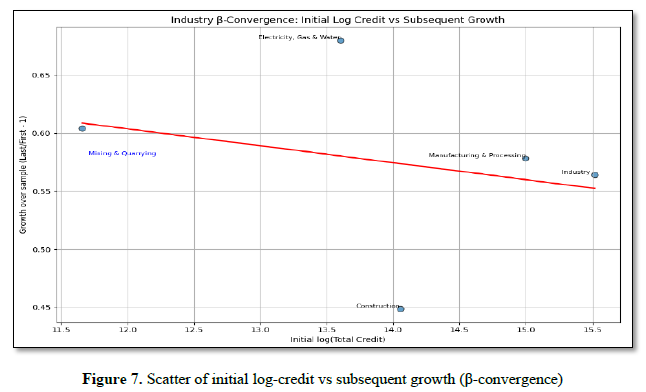
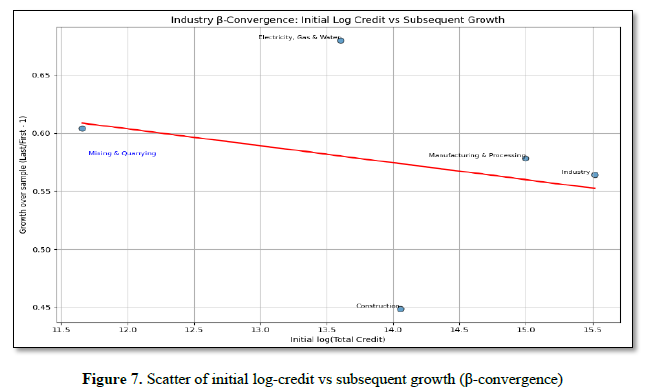
Figure 7 depicts the relationship between initial log credit and subsequent growth across industries, providing a visual test of β-convergence. The downward-sloping regression line suggests that industries with lower starting credit levels tended to record faster growth over the sample, consistent with convergence dynamics. Mining & Quarrying, as well as
Construction, illustrate this catch-up effect most clearly, while Electricity, Gas & Water displays higher growth despite a moderate initial base. By contrast, Manufacturing & Processing is near the higher initial credit end, where growth rates are more subdued. The negative slope provides evidence that lagging industries have partially closed the gap with credit-rich segments over time.
How persistent are credit growth patterns across dimensions?
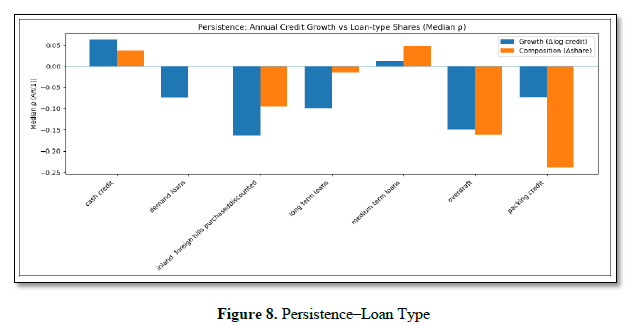
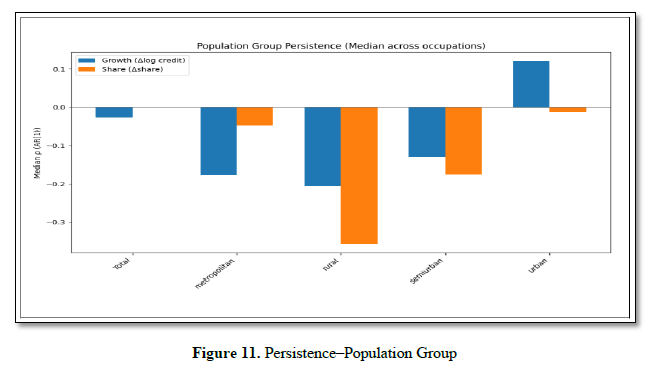
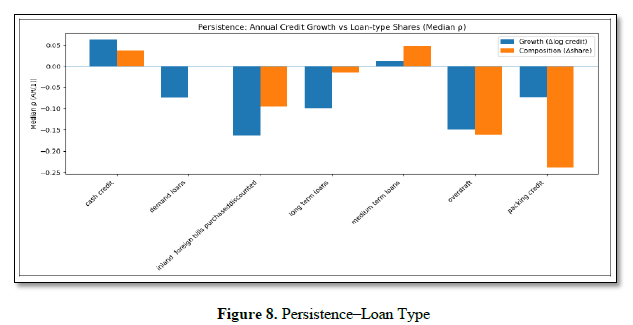
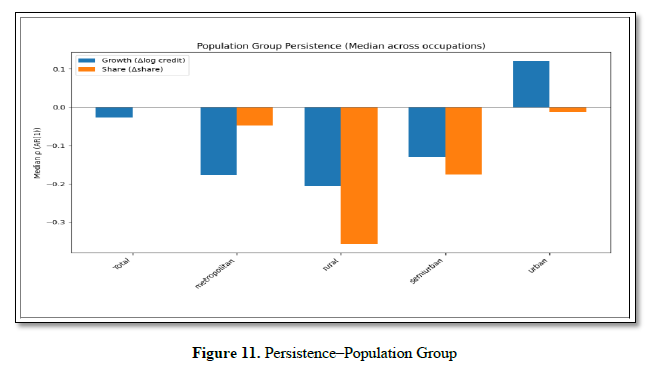
An important dimension of credit market behavior is the degree of persistence in growth across borrower segments and loan categories. Persistence indicates whether credit expansions or contractions tend to sustain themselves over time, while mean reversion suggests that surges in lending are followed by slowdowns. Understanding these dynamics is critical for monetary policy transmission. If credit growth is highly persistent, policy interventions may have long-lived effects, whereas mean reversion implies that endogenous adjustments within the banking system already stabilize credit flows. The disaggregated dataset enables us to evaluate these dynamics systematically. By estimating autoregressive models of credit growth, we assess whether surges in borrowing for specific products or borrower segments are self-sustaining or self-correcting. This approach provides insight into whether credit markets amplify shocks or absorb them through endogenous adjustment. Industrial credit growth in India shows strong mean reversion; industries that expand rapidly in one period tend to slow in the next. This built-in correction reduces the need for heavy cyclical controls, though care is needed to avoid liquidity strains for viable firms. Banks also rebalance their portfolios flexibly, shifting between overdrafts, demand loans, and term loans, which helps dampen systemic risk and should be supported by removing rigidities. Short-term products, such as overdrafts and packing credit, act as temporary buffers, spiking during periods of stress or seasonal demand but fading quickly. Therefore, monitoring them can help calibrate timely liquidity support. In contrast, medium and long-term loans provide stability, underscoring the need to safeguard structural funding channels such as DFIs and bond markets (Figure 8).
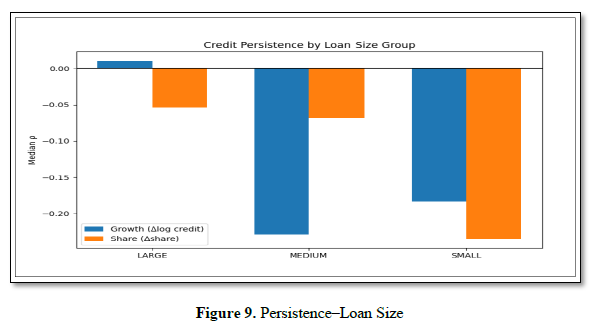
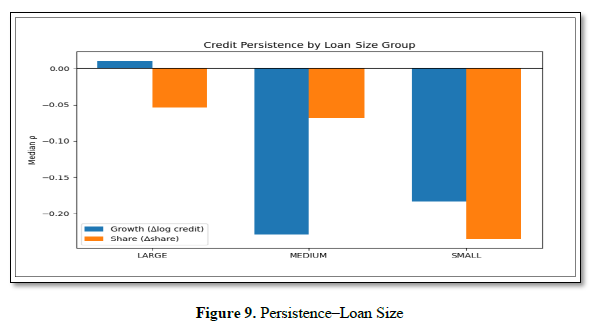
Figure 9 illustrates that credit growth persistence sharply declines as the size of loans decreases. Large exposures tend to have near-zero or slightly positive growth persistence, with only mild mean reversion in the ir portfolio share, reflecting stability and long-term borrower relationships. Medium loans already show strong mean reversion in growth and a moderate drop in share persistence, indicating cyclical adjustments. The most significant reversal occurs in small loans, where both growth and share exhibit strong negative persistence, implying that expansions are quickly reversed and these loans remain highly volatile. The results emphasize that stability is primarily found in large-ticket lending, while smaller loans tend to be transitory and more susceptible to shocks.
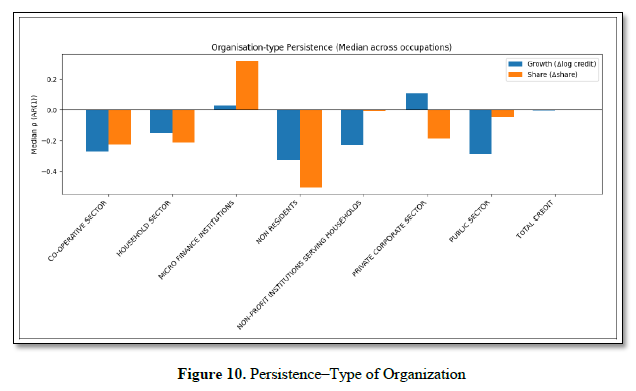
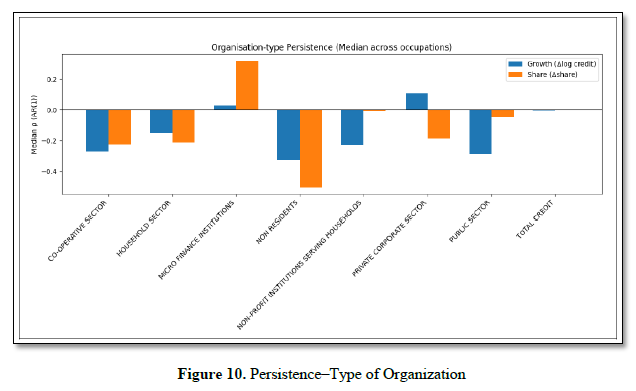
This chart reveals that credit persistence varies sharply across organization types. Cooperatives, households, and MFIs exhibit negative persistence in both growth and share, indicating that expansions are quickly reversed and portfolio positions remain volatile. Non-residents and NPISH display the strongest mean reversion, with sharp contractions following surges. By contrast, private corporate and the public sector show relative stability, with mild persistence or only modest reversals, underscoring their entrenched position in formal credit markets. These patterns suggest that stability is concentrated in large institutional borrowers, while smaller and niche organizations face cyclical swings that limit their sustained access to credit.
Heterogeneity in Industrial Credit: Econometric Evidence
This section outlines the econometric methodology employed to analyze the impact of monetary policy, measured via changes in the industrial weighted average lending rate (WALR), on bank credit growth and composition.
A dynamic panel regression with fixed effects is set up
𝑄𝑜𝑄𝐺𝑟𝑜𝑤𝑡ℎ𝑖𝑡 = 𝛼 + Σ4k=0 𝛽𝑖,𝑘(Δ𝑊𝐴𝐿𝑅𝑡−𝑘×𝐷𝐼𝑛𝑑𝑢𝑠𝑡𝑟𝑦=𝑖) + 𝜌𝑄𝑜𝑄𝐺𝑟𝑜𝑤𝑡ℎ𝑖𝑡−1+𝜇𝑖+𝜏𝑡+𝜀𝑖𝑡 (1)
Here, the dependent variable is the quarterly log difference in outstanding credit, ∆𝑊𝐴𝐿𝑅𝑡 is the quarterly difference in the industrial weighted average lending rate
𝑄𝑜𝑄𝐺𝑟𝑜𝑤𝑡ℎ𝑖𝑡= quarterly log- difference of credit outstanding in industry i at time t.
∆𝑊𝐴𝐿𝑅𝑡 =Change in WALR in quarter t-k.
𝐷𝐼𝑛𝑑𝑢𝑠𝑡𝑟𝑦=𝑖 = Industry dummy (construction, mining, manufacturing, and electricity)
𝜇𝑖 = Industry fixed effects
𝜏𝑡 = time (quarter) fixed effects.
𝜀𝑖𝑡 = error term, clustered by segment
This specification allows us to identify whether credit growth in different industries responds differently to WALR shocks and whether these effects are immediate or lagged.
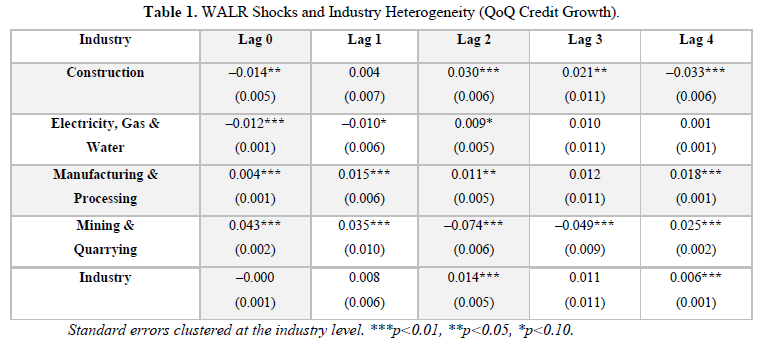
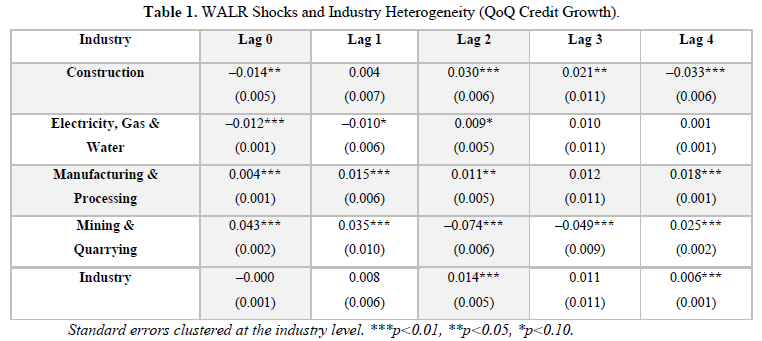
The results indicate that changes in the weighted average lending rate (WALR) have a heterogeneous impact across industries. Credit to construction contracts immediately when WALR rises, reflecting the high sensitivity of short-term project and working-capital loans to lending costs. Although there is some rebound in subsequent quarters, the medium-term effect remains contractionary. Similarly, lending to the electricity, gas and water sector declines significantly in the quarters following a rate increase. This lagged response is consistent with the borrowing patterns of state-owned utilities, where loan renewals and working-capital lines typically adjust with a delay, making their credit flows more sensitive in the medium horizon.
By contrast, manufacturing & processing exhibit relative resilience. The coefficients for this sector are generally small and positive, suggesting that manufacturing credit growth slows less than other sectors during tightening episodes. One interpretation is that banks, faced with higher funding costs, tend to priorities lending to establish corporate with stronger repayment capacity. This relative insulation may not be read as expansionary lending, but rather as a sign of credit real location in favour of safer, large-scale borrowers.
Finally, the mining & quarrying sector shows a highly oscillatory pattern: positive responses in the near term, sharp contractions after two to three quarters, and are bound thereafter. This volatility is likely linked to the sector’s dependence on commodity cycles and infrastructure demand, which can amplify or offset the effect of tighter monetary policy.
At the aggregate industry level, the WALR coefficients are small and statistically insignificant, underscoring that the impact of monetary policy transmission becomes visible only once heterogeneity across industries is taken into account. The findings suggest that monetary tightening disproportionately affects infrastructure-linked sectors, while manufacturing is comparatively insulated, highlighting the distributional dimension of credit market adjustment to interest rate shocks.
Convergence
To examine convergence dynamics across industries, we estimate 𝛽-convergence regressions at the industry level. The dataset covers quarterly credit outstanding, disaggregated into Working Capital (WC) and Term Loans (TL), for major industries.
WC= = sum of cash credit, overdraft, demand loans, packing credit, and bills discounted
TL = sum of medium- and long-term loans.
For each industry and account type, we compute the year-on-year (YoY) log growth:
∆ln (𝑦𝑖, 𝑔,𝑡)=ln(𝑦𝑖,𝑔,𝑡) − ln(𝑦𝑖,𝑔,𝑡−4)
𝑦𝑖,,𝑡 is the credit outstanding for industry at time t. For each industry and account type
𝑔∈{𝑊𝐶,𝑇𝐿}, we estimate, ∆ln(𝑦𝑖,𝑔,𝑡) = 𝛼+𝛽 ln(𝑦𝑖,𝑔,𝑡−4) + 𝜀𝑖,𝑔,𝑡 (2)
𝛽 < 0 indicates convergence, segments with lower initial credit grow faster.
𝛽 > 0 indicates divergence: large credit segments continue to outpace smaller ones.
Significance is evaluated with t-tests; regressions are run separately for each industry.
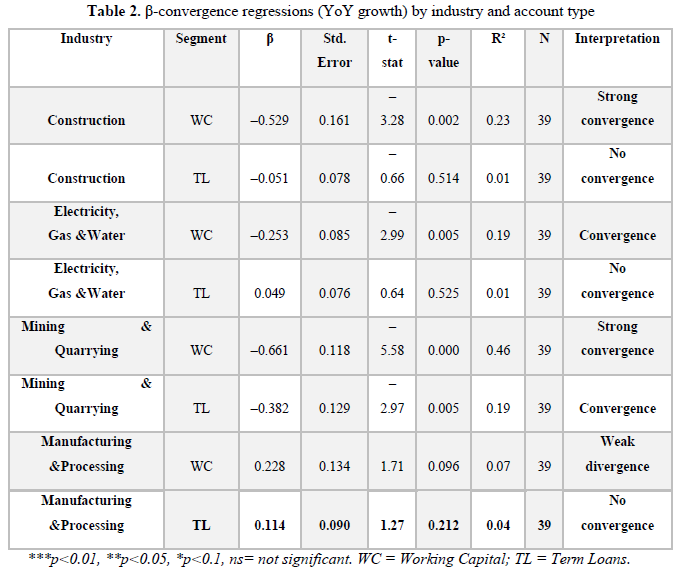
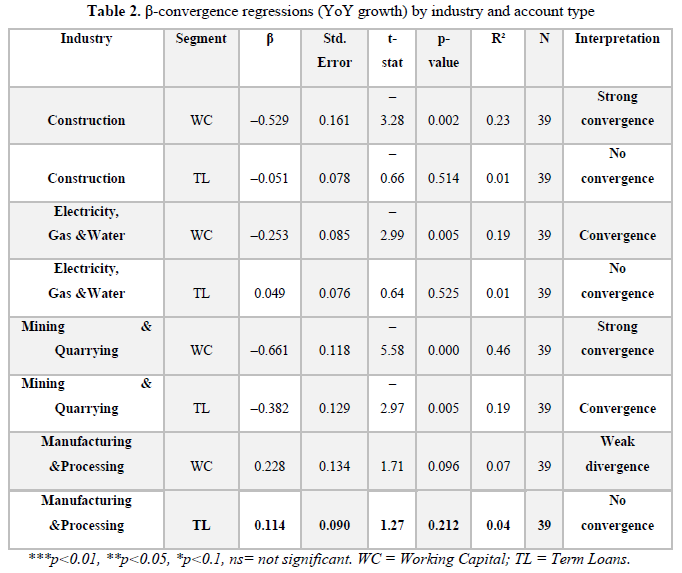
The results point to heterogeneous convergence patterns across industries. Strong evidence of convergence is found in Working Capital credit for Construction (β = –0.53), Electricity (β = –0.25), and Mining (β = –0.66). In Mining, convergence extends even to Term Loans (β=–0.38), suggesting that lagging subsegments in this sector are catching up robustly. This pattern implies that industries historically under-supplied with WC credit are now growing faster, narrowing the gap with high-credit industries.
By contrast, Manufacturing shows weak divergence, with β positive for WC (0.23, p≈0.09) and TL (0.11, ns), indicating that larger incumbents may still dominate credit growth. At the aggregate “Industry” level, TL credit displays mild divergence (β = 0.13, p < 0.05), consistent with concentration in large, capital-intensive projects. The analysis suggests that convergence is more prominent in short-term WC credit, while long-term TL lending remains concentrated, except in resource-oriented sectors such as Mining.
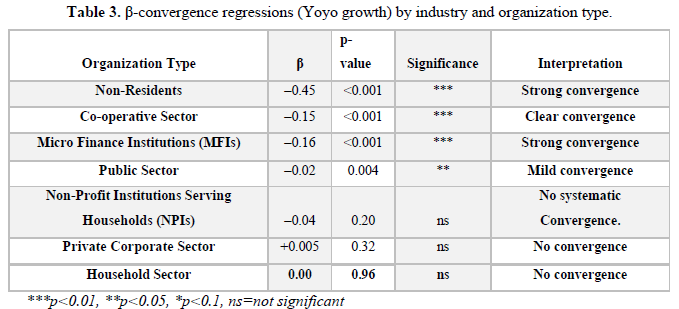
Eq (2) is estimated for different organization type and exults are presented in Table 3 below.
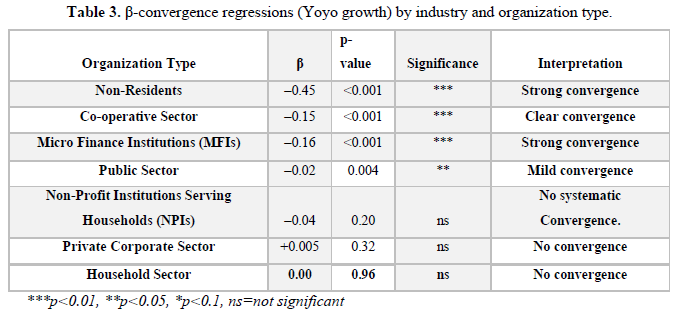
Apparent convergence is concentrated in smaller/underserved segments - Non-Residents, Co-operatives, and MFIs all show negative and significant β, meaning these sectors are growing faster if they started from a low base. Even PSUs display mild catch-up. No convergence in dominant groups - Private Corporates and Households show β ≈ 0 (insignificant). This suggests big, entrenched players retain their lead, while convergence is driven by niche or emerging segments.
CONCLUSIONS
This paper examines heterogeneity in India’s industrial credit markets using disaggregated quarterly data from the Reserve Bank of India’s Basic Statistical Returns (2014–2025). Three dimensions were studied: (i) the persistence of credit growth across industries, organizations, loan sizes, and geographies; (ii) the effect of volatility and lending rate shocks on the maturity mix between working capital and term loans; and (iii) convergence and inequality dynamics in credit allocation. The analysis revealed three key findings. First, industrial credit growth generally exhibits mean reversion, while lending rates is more persistent, highlighting an asymmetry between the quantity and price channels of monetary transmission. Short-term instruments such as overdrafts and packing credit serve as temporary buffers, whereas long-term loans offer structural stability. Second, sensitivity to interest rate shocks differs significantly: credit in construction and electricity declines sharply, while mining credit fluctuates with commodity cycles, and manufacturing credit remains relatively stable, indicating banks’ preference for established firms during tightening phases. Third, convergence patterns are uneven. Evidence of catch-up appears in working capital credit for construction, electricity, and mining, as well as for co-operatives, MFIs, and non-residents. Conversely, long-term loans and manufacturing credit display divergence, and concentration remains high in large-ticket lending despite a gradual decline in inequality indices. Short-term credit acts as a buffer; macro prudential policy should monitor their volatility and consider counter-cyclical liquidity windows or sector-specific refinance schemes to reduce abrupt shifts. Moreover, given the stabilizing role of term loans, policies should aim to protect long-term credit channels through development finance institutions (DFIs), corporate bond markets, and supportive prudential frameworks. Infrastructure-related sectors (construction, electricity, mining) remain more vulnerable to tightening, while manufacturing is more insulated. Calibrating sector-specific interventions can reduce uneven policy impacts. The convergence among smaller organizations and rural or semi-urban regions is promising but incomplete. Refinancing for MFIs and co-operatives, along with targeted credit guarantees for underserved borrowers, can help continue this catch-up. The dominance of large-ticket loans underscores systemic risk. Ongoing monitoring of loan size concentration and promoting lending to medium-sized enterprises are essential for resilience and inclusive growth.
No Files Found


Internationally Accepted
Share Your Publication :