
-
Publish Your Research/Review Articles in our High Quality Journal for just USD $99*+Taxes( *T&C Apply)
Offer Ends On
Publish Your Research/Review Articles in our High Quality Journal for just USD $99*+Taxes( *T&C Apply)
Offer Ends On
Fernando Mora Estévez*
Corresponding Author: Fernando Mora Estevez, Director medico en Mora&García Clínica Odontológica Ourense, Galicia, Spain.
Received: October 20, 2026 ; Revised: October 29, 2026 ; Accepted: November 03, 2026 ; Available Online: November 04, 2026
Citation: Estevez FM. (2026) Staged Bicortical Implant Rehabilitation in a Medically Compromised Patient. J Oral Health Dent Res, 5(3): 1-5.
Copyrights: ©2026 Estevez FM. This is an open-access article distributed under the terms of the Creative Commons Attribution License, which permits unrestricted use, distribution, and reproduction in any medium, provided the original author and source are credited.
Views & Citations
Likes & Shares
Background: Managing extensive maxillary tooth loss and periapical pathology in medically compromised individuals demands careful surgical planning to minimize hemorrhagic complications and preserve masticatory function. This report describes the staged oral rehabilitation of a 54-year-old male on active anticoagulant therapy and pharmacologic management for hypertension, presenting with right maxillary partial edentulism and symptomatic crown fractures with apical infections in the left quadrant.
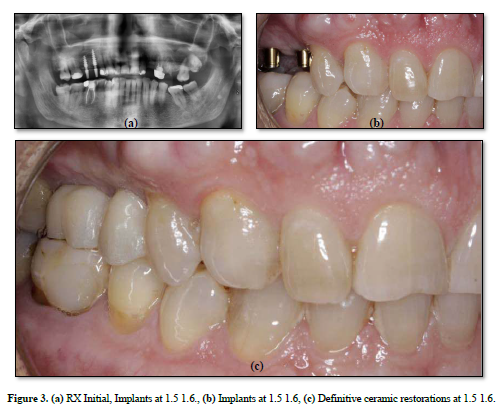
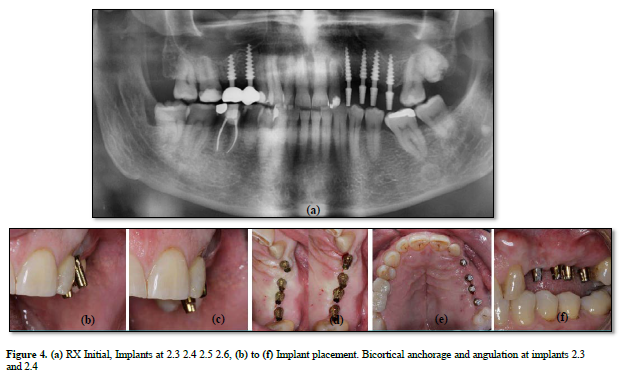
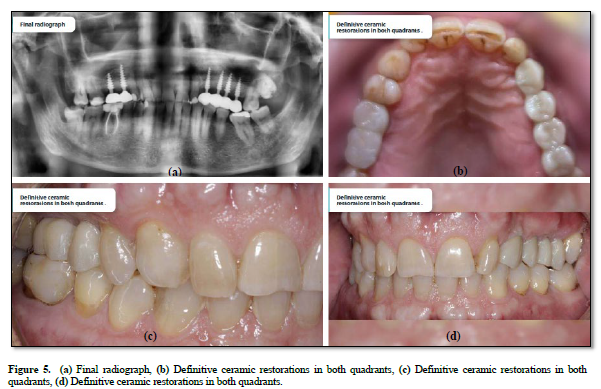
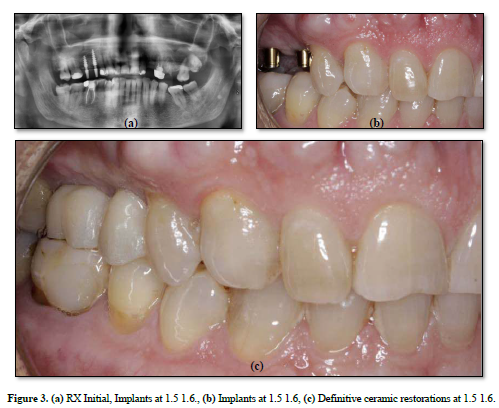
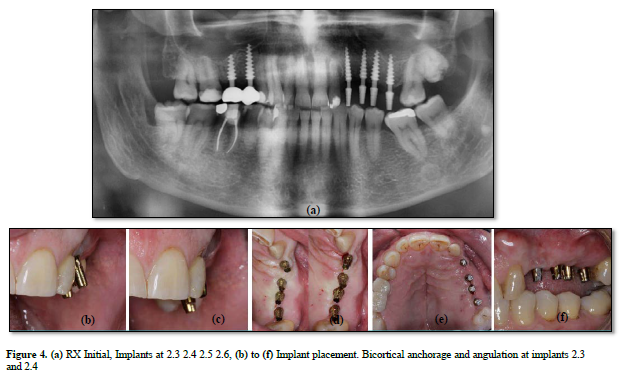
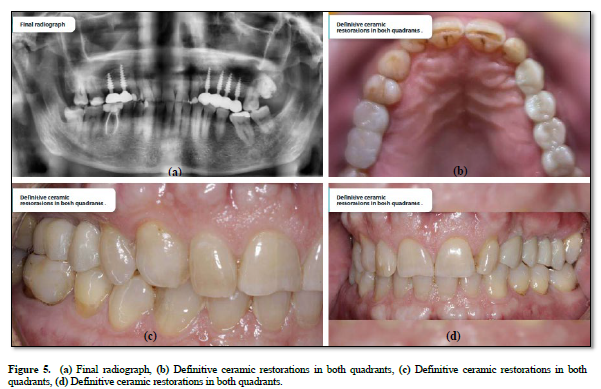
Case Description: Treatment was sequenced in two distinct surgical phases to avoid complete masticatory disruption. Phase one involved implant placement in the right maxillary quadrant (sites 1.5 and 1.6) to re-establish a stable posterior occlusion. The second phase addressed the contralateral quadrant (sites 2.3–2.6), where multi-unit implants were placed utilizing strategic bicortical anchorage and corrective angulation. Immediate-to-early acrylic provisional prostheses were delivered and splinted for approximately 2.5 months to ensure splinted load distribution during osseointegration. Definitive rehabilitation was executed using monolithic zirconia ceramic bridges across both quadrants.
Conclusion: A staged surgical protocol combined with bicortical anchorage and immediate splinted temporization offers a safe, predictable treatment pathway for hypertensive and anticoagulated patients requiring bilateral posterior maxillary reconstruction. In this case monoblock implants are used, but bicortical anchorage is achieved during placement. However, it's important to note that these are compressive monoblock implants.
Keywords: Dental Implants; Bicortical Anchorage; Anticoagulant Therapy; Staged Rehabilitation; Zirconia Prosthesis; Maxillary Edentulism.
CLINICAL CASE PRESENTATION
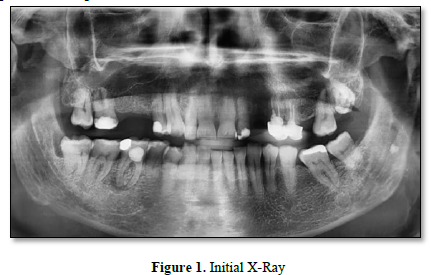
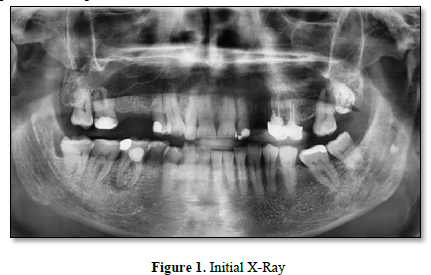
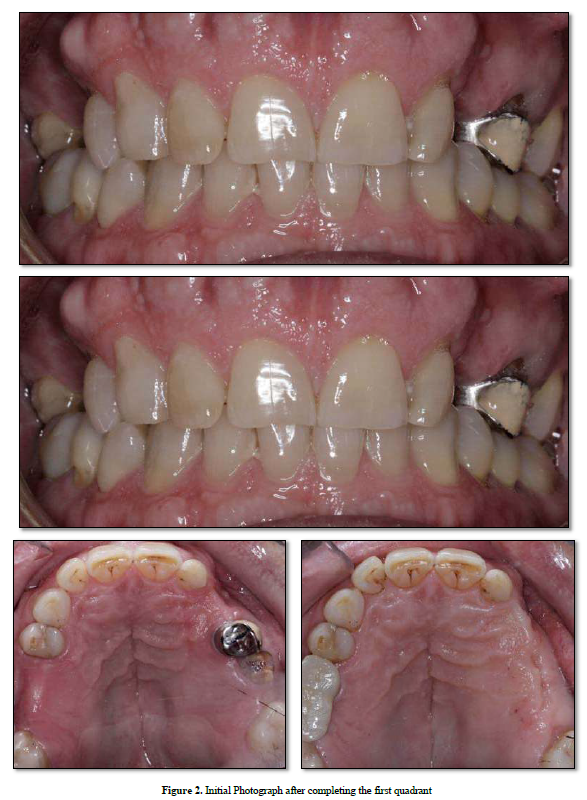
A 54-year-old male patient, currently under pharmacological management for hypertension and receiving anticoagulant therapy, presented with an edentulous area in the first quadrant, along with fractured crowns associated with apical infectious processes in the second quadrant.
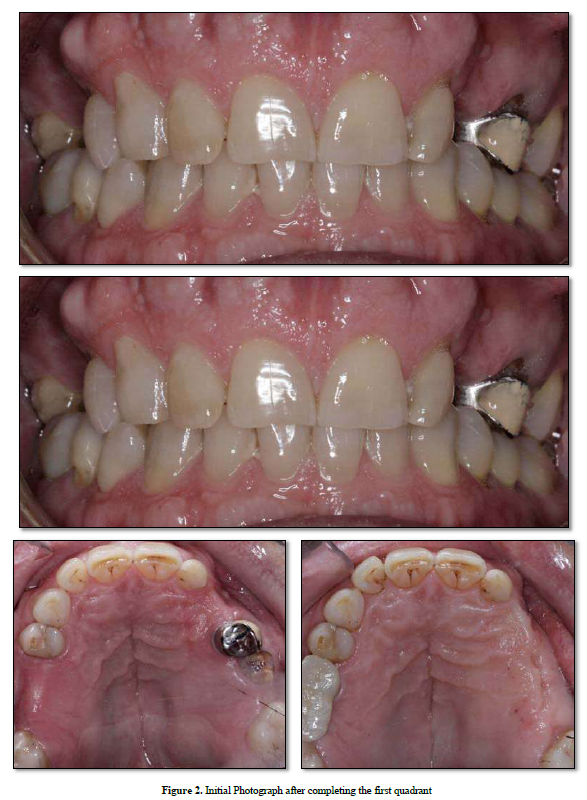
A staged treatment approach was established. Initially, rehabilitation of the first quadrant was performed in order to restore functional occlusion on the right side. Subsequently, a second surgical phase was planned for the treatment of the second quadrant.
Following implant placement in both regions, provisional
restorations were delivered, splinting the implants for a period of approximately two and a half months. Final rehabilitation was completed with zirconia prosthetic restorations.

No Files Found


Internationally Accepted
Share Your Publication :