
-
Publish Your Research/Review Articles in our High Quality Journal for just USD $99*+Taxes( *T&C Apply)
Offer Ends On
Publish Your Research/Review Articles in our High Quality Journal for just USD $99*+Taxes( *T&C Apply)
Offer Ends On
Philip L Millstein*, Carlos E. Sabrosa and Karen Geber
Corresponding Author: Philip L Millstein, Department of Restorative Dentistry, Harvard School of Dental Medicine, Boston, Massachusetts, USA.
Received: April 24, 2026 ; Revised: April 27, 2026 ; Accepted: April 28, 2026 ; Available Online: April 30, 2026
Citation: Millstein PL, Sabrosa CE & Geber K. (2026) Occlusal Contact Is an Essential Element for Immediate Loading. J Oral Health Dent Res, 5(3): 1-5.
Copyrights: ©2026 Millstein PL, Sabrosa CE & Geber K. This is an open-access article distributed under the terms of the Creative Commons Attribution License, which permits unrestricted use, distribution, and reproduction in any medium, provided the original author and source are credited.
Views & Citations
Likes & Shares
Immediate loading is a viable means for implant placement and healing. Careful planning along with occlusal contact placement is suggested.
Keywords: Implant, Immediate loading, Occlusal contact, 5 years, Success.
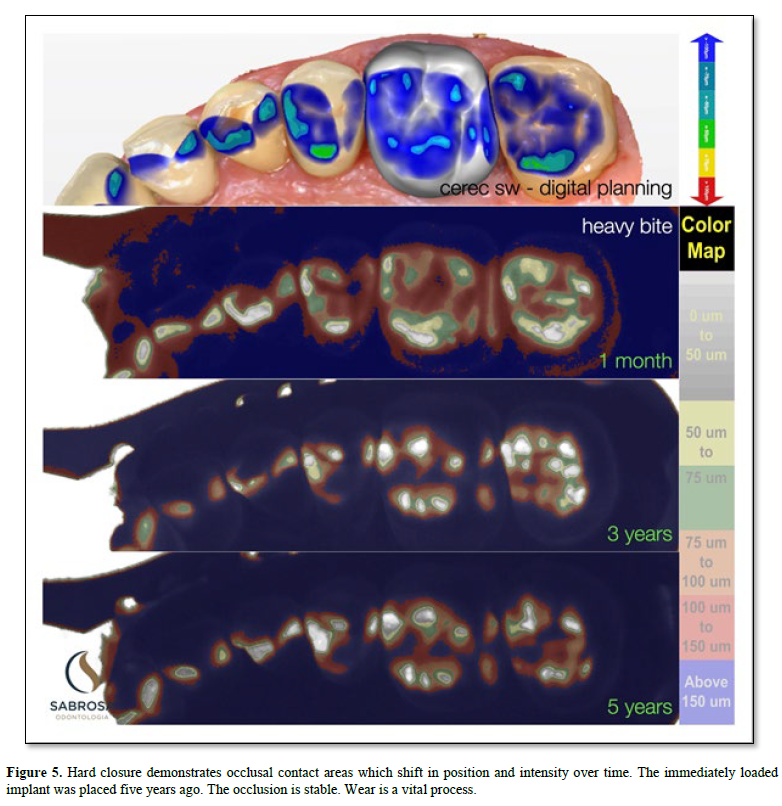
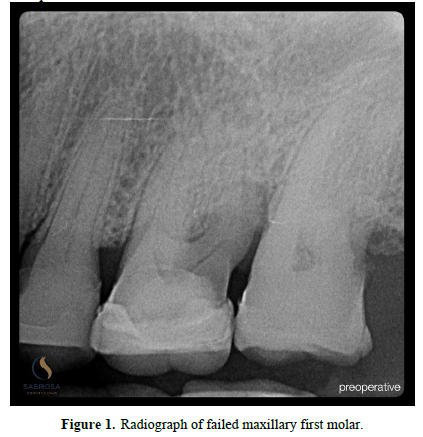
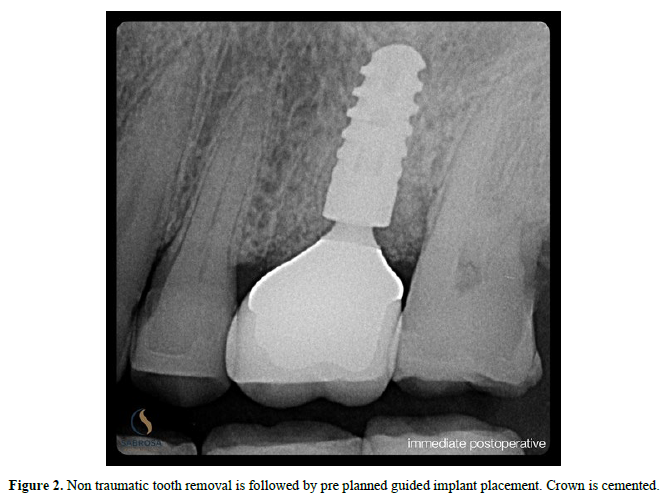
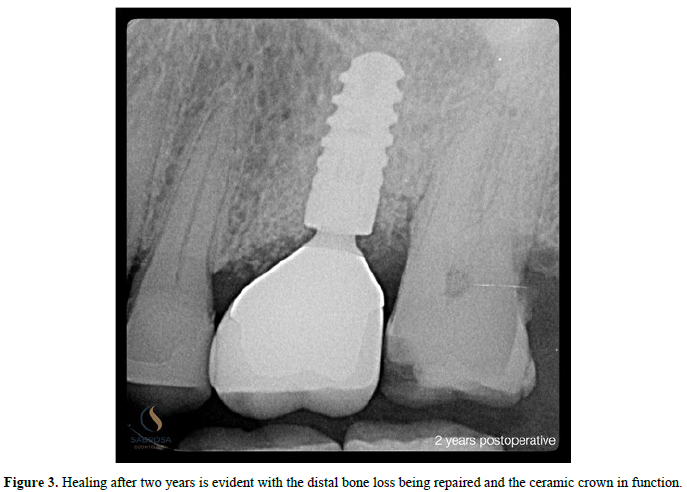
Occlusion is about teeth (1). A good occlusion is good; a bad occlusion is bad. How does a clinician assess occlusion? We look at a frontal facial or side view and judge good from bad according to our aesthetic sense. Other than skeletal malformations there are few ways to make judgement. A definition of occlusion relates to a closed jaw position. Occlusal function refers to many occlusal contact areas working together (2). Each occlusal contact area functions independently. Together they work in unison. The modern day definition of occlusion should be of occlusal contacts because they make an occlusion work. No contact, no function. An occlusal contact forms when two opposing surfaces make contact. Touch is important (3). Contact and touch vary. Size, area, intensity and misplaced areas of contact affect a functioning occlusion (4). We can measure and record contact areas which represent areas of wear and tear (5). They establish a pattern over time. Each active contact surface differs as does each area in function. No two people have the same occlusal contact profile (6). Occlusion is a general term whereas occlusal contact is specific. Touch and intensity of contact are reduced in endodontically treated teeth (7). Implants are rigid and not touch sensitive (8). Vital teeth have mechanoreceptors in the periodontal housing to guide their micro movements (9). They also have a vital blood supply (10). Occlusal contact is a dynamic process which includes increased blood flow. Teeth vibrate with micro movements as contact intensity increases. The dynamic of contact is unknown. Wear is a vital process. Immediate implant loading can be successful when there is occlusal contact. Figures. 1,2,3. Patients with knee or hip replacements walk immediately after surgery (11).
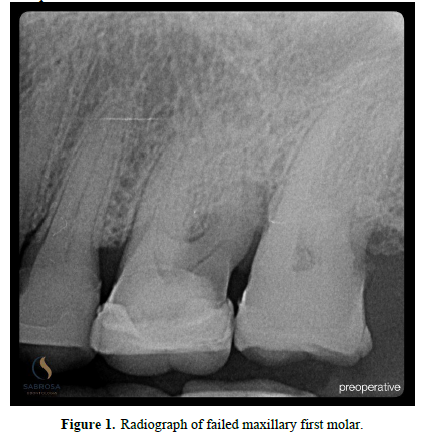
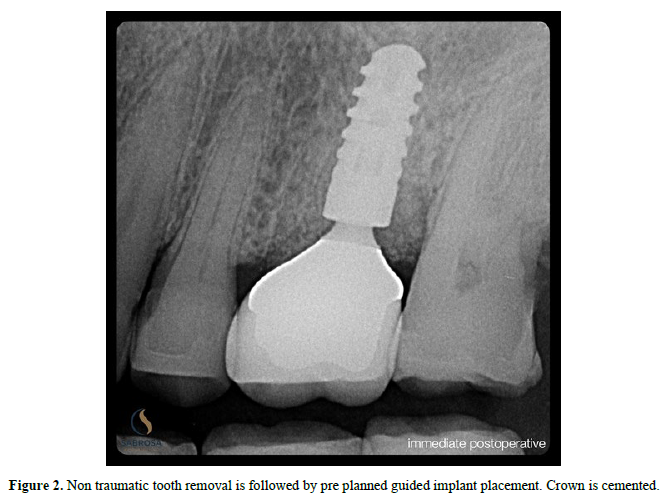
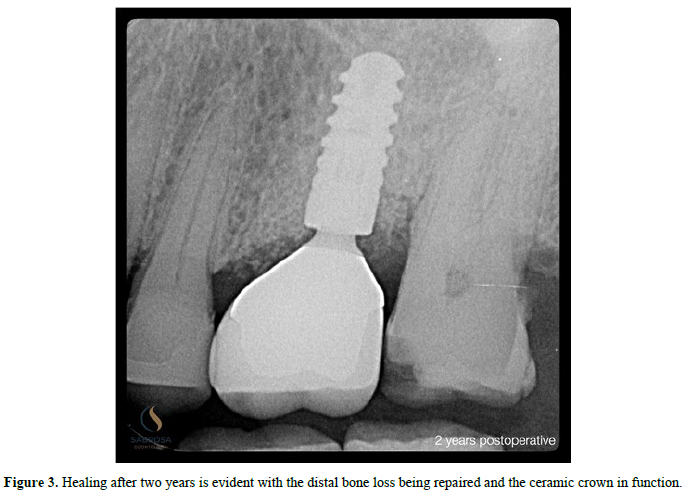
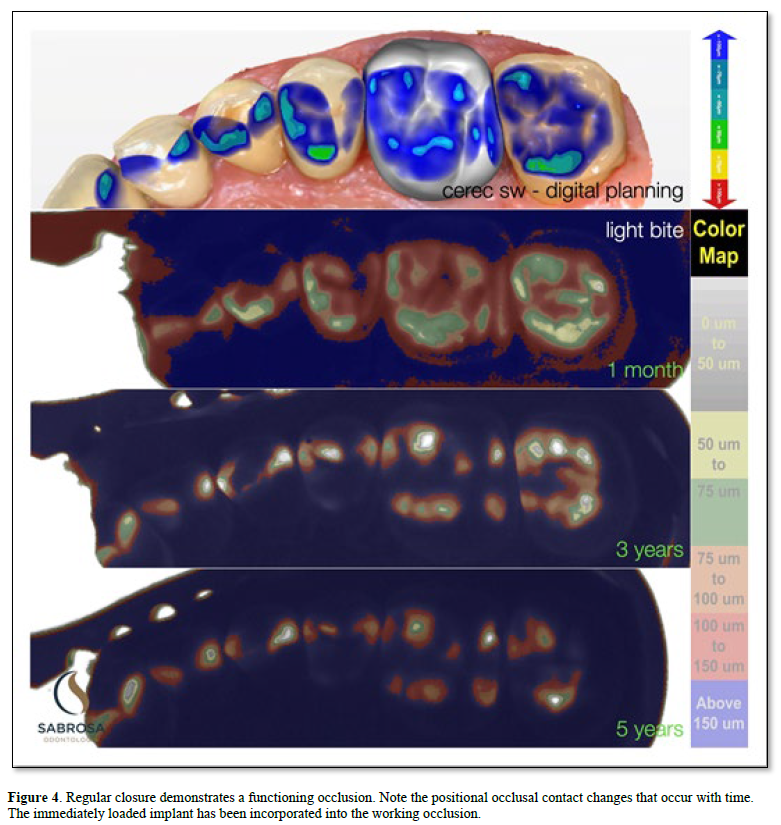
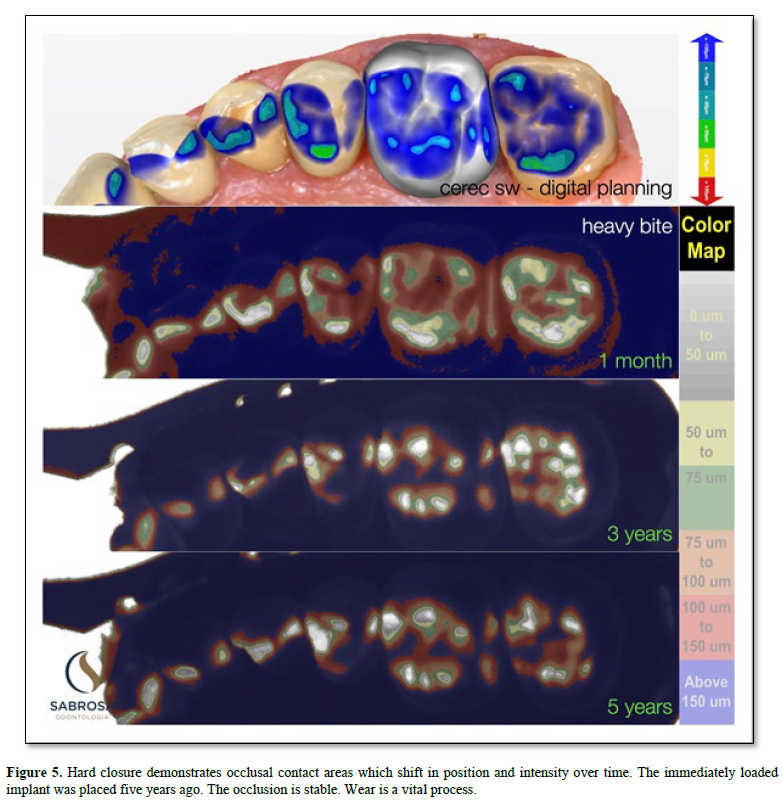
Immediate loading is part of a clinical treatment however success in dentistry often depends on occlusal adjustment at the time of delivery and at subsequent visits. Function is an important part of healing. The shifting of contact areas and their locations over the years demonstrates the viability of a dynamic process Figures.4,5.
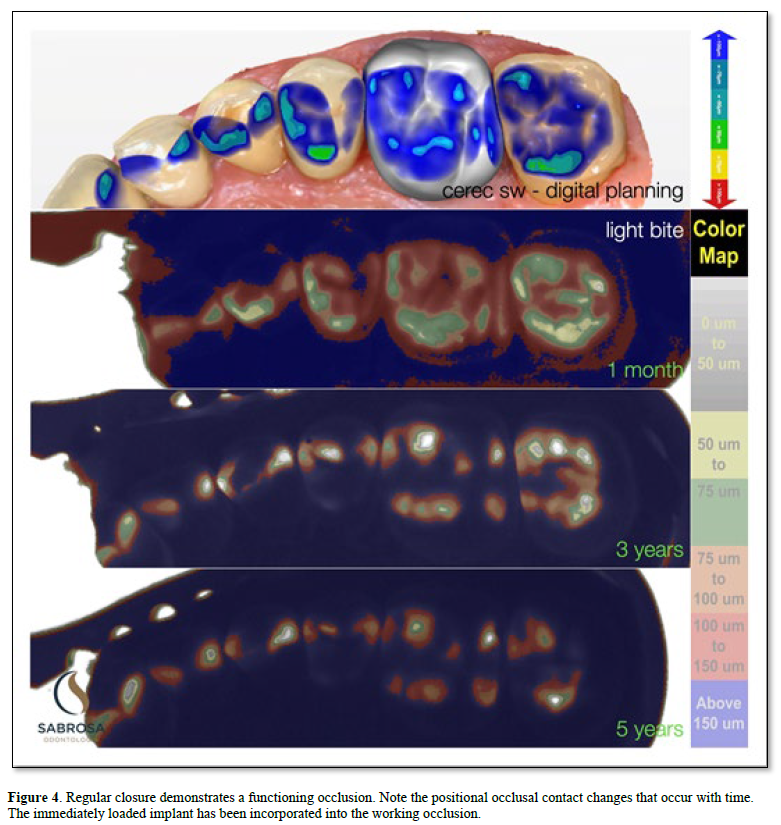
Occlusal contact is not static. If there was no surface wear static contact would impede function. Wear and movement are normal processes. The TMJ and mandibular positions adjust with occlusal contact change. Implant crown contact areas must be routinely evaluated because they do not adapt to a dynamic occlusion. If there are no permanent occlusal contact records then contact positions can not be reviewed and compared over time. Permanent occlusal contact records remain non existent.
In order to make permanent occlusal contact records the hygienist takes a closed inter occlusal record in a triple tray using silicone impression material. The tray is placed on an illuminated light surface in a scanner. A camera above is used to photograph the illuminated impression. A permanent record is made and the density of the resultant black and white image is examined using an image analysis program (Image J). Color is applied for easy viewing. Scanning of the photographs may also provide an overview of the dental occlusion in function. Skilled interpretation is an essential element in maintaining occlusal contact stability.

No Files Found


Internationally Accepted
Share Your Publication :